
Introduction
Power distribution systems rely on safe, stable, and low-resistance grounding to protect equipment, ensure personnel safety, and maintain reliable operation. As modern grids expand and installation efficiency becomes increasingly important, Insulation Piercing Ground Connectors (IPGCs) have become a preferred solution across many power distribution applications.
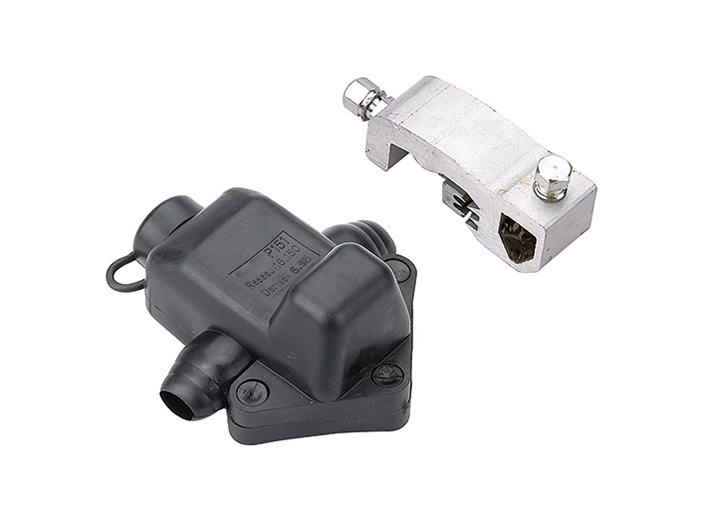
Overhead Power Distribution Lines
One of the most common applications of insulation piercing ground connectors is in overhead low- and medium-voltage distribution networks.
Provide reliable grounding for insulated conductors
Enable quick installation without stripping insulation
Reduce service interruption during upgrades or maintenance
Ensure stable grounding continuity in outdoor environments
IPGCs are particularly valuable for pole-mounted systems where access and working time are limited.
Pole-Mounted Equipment Grounding
Pole-mounted electrical equipment requires dependable grounding to protect both devices and personnel.
Typical applications include:
Transformers
Reclosers and switches
Surge arresters
Capacitor banks
Insulation piercing ground connectors allow grounding conductors to be connected directly to insulated phase or neutral cables, improving installation speed and safety.
Street Lighting and Public Infrastructure
Street lighting systems often cover large areas and require efficient grounding solutions.
IPGCs are widely used in:
Street light poles
Roadside distribution cabinets
Public lighting networks
Their fast installation and weather-resistant design make them ideal for municipal and urban power distribution projects.
Substations and Secondary Distribution Systems
In substations and secondary distribution systems, grounding reliability is critical.
Insulation piercing ground connectors are applied for:
Grounding insulated conductors inside secondary distribution circuits
Temporary grounding during maintenance
Bonding between grounding networks and insulated cables
Their controlled torque and low contact resistance help maintain grounding integrity in high-demand environments.
Industrial Power Distribution Networks
Industrial facilities require grounding solutions that can withstand vibration, heat, and continuous operation.
IPGCs are commonly used in:
Factory power distribution lines
Motor control centers (MCCs)
Industrial lighting systems
Equipment grounding connections
Their robust mechanical design ensures long-term stability and minimal maintenance in industrial settings.
Renewable Energy Power Distribution Systems
Renewable energy installations place high demands on grounding due to environmental exposure and system scale.
Insulation piercing ground connectors are increasingly used in:
Solar photovoltaic (PV) distribution lines
Wind power grounding systems
Distributed energy networks
Their corrosion resistance and sealing performance make them suitable for outdoor and remote renewable energy projects.
Temporary Grounding and Maintenance Operations
During system upgrades, inspections, or emergency repairs, fast and reliable temporary grounding is essential.
IPGCs enable:
Rapid temporary grounding without cutting insulation
Safe connection to existing insulated conductors
Reduced downtime during maintenance operations
This makes them a practical solution for utility maintenance teams.
Retrofit and Network Expansion Projects
In retrofit or expansion projects, working with existing insulated cables is common.
Insulation piercing ground connectors are ideal for:
Adding grounding points to existing lines
Expanding distribution networks without cable replacement
Minimizing disruption to operating systems
Their non-invasive installation method simplifies system upgrades.
Underground-to-Overhead Transition Points
At transition points between underground and overhead distribution systems, reliable grounding is essential.
IPGCs provide:
Secure grounding connections on insulated conductors
Compact installation in limited space
Long-term electrical stability
They help ensure smooth and safe transitions within the distribution network.
Smart Grid and Modern Power Distribution Systems
As power distribution systems evolve toward smart grids, installation efficiency and reliability become even more important.
IPGCs support:
Faster deployment of monitoring and control equipment
Reliable grounding for smart sensors and devices
Simplified integration into existing infrastructure
Their design aligns well with modern grid development requirements.
Conclusion
From overhead distribution lines and substations to renewable energy and smart grid applications, insulation piercing ground connectors play a vital role in modern power distribution systems. Their ability to deliver safe, reliable grounding without stripping insulation makes them an efficient and future-ready solution for utilities, contractors, and industrial users.
As power networks continue to expand and modernize, insulation piercing ground connectors will remain an essential component in ensuring electrical safety and system reliability.
FAQ
1. Why are insulation piercing ground connectors widely used in power distribution systems?
They allow fast and reliable grounding connections without stripping insulation, reducing installation time, minimizing conductor damage, and improving safety—especially in overhead and outdoor power distribution networks.
2. Can insulation piercing ground connectors be used in both low- and medium-voltage systems?
Yes. IPGCs are commonly used in low-voltage and medium-voltage power distribution systems, provided the connector model matches the conductor size and voltage rating.
3. Are insulation piercing ground connectors suitable for outdoor and harsh environments?
Yes. They are designed with UV-resistant housings, corrosion-resistant contact materials, and sealed structures, making them ideal for long-term outdoor use.
4. Where are insulation piercing ground connectors most commonly installed?
Typical installation locations include:
Overhead distribution lines
Pole-mounted transformers and switches
Street lighting systems
Industrial power networks
Renewable energy distribution systems
5. Can insulation piercing ground connectors be used for temporary grounding?
Yes. They are frequently used for temporary grounding during maintenance, inspections, or emergency repairs, as they can be installed quickly without modifying existing cables.
6. Do insulation piercing ground connectors damage the conductor?
No. Properly designed piercing teeth penetrate insulation while maintaining conductor integrity and providing a stable, low-resistance contact.