
Introduction
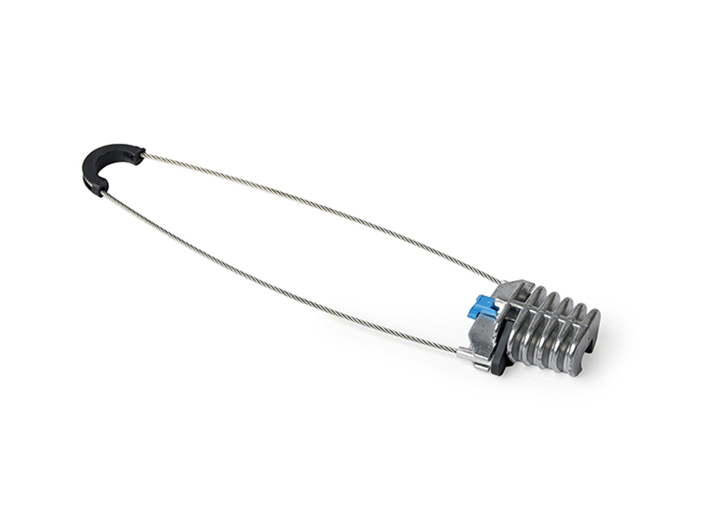
In overhead power transmission and fiber optic cable systems, dead end tension clamps play a critical role in anchoring conductors and transferring mechanical loads to supporting structures. The structural design of these clamps directly determines their load capacity, safety margin, and long-term reliability. This article explores the key structural elements of dead end tension clamps and explains how each component influences load-bearing performance.
Why Structural Design Matters for Load Capacity
Load capacity refers to the maximum tensile force a dead end tension clamp can withstand without deformation, slippage, or failure. A well-designed structure ensures:
Even stress distribution along the conductor
Secure gripping under continuous tension
Resistance to fatigue, vibration, and environmental stress
Poor structural design can lead to conductor damage, clamp slippage, or catastrophic line failure.
Key Structural Components of Dead End Tension Clamps
Clamp Body Design
The clamp body serves as the primary load-bearing element. Its shape, thickness, and material determine how tensile forces are distributed.
Impact on Load Capacity:
Thicker, reinforced bodies increase mechanical strength
Smooth internal surfaces reduce stress concentration
Aerodynamic profiles reduce wind-induced vibration
High-strength aluminum alloy bodies provide an optimal balance between strength and weight.
Gripping Mechanism (Wedge or Preformed Structure)
The gripping mechanism is responsible for holding the conductor firmly under tension. Common designs include:
Wedge-type self-locking structures
Preformed helical armor rods
Impact on Load Capacity:
Self-tightening wedges increase grip as tension rises
Larger contact areas reduce localized stress
Proper grip prevents conductor slippage and strand damage
A well-engineered gripping system ensures that the clamp can reach its rated breaking load.
Load Transfer Interface
This interface connects the clamp to insulators, poles, or towers, typically using:
U-bolts
Clevises
Shackles
Impact on Load Capacity:
Forged steel connectors enhance tensile performance
Precision machining ensures stable force transfer
Poor interface design can become a mechanical weak point
Protective Inserts and Liners (for ADSS & OPGW)
For fiber optic cables, dead end tension clamps often include rubber or polymer inserts.
Impact on Load Capacity:
Prevent cable sheath damage
Improve friction without excessive compression
Maintain long-term grip under temperature changes
These inserts allow high load capacity without compromising cable integrity.
Structural Design Factors Influencing Load Performance
Contact Area with the Conductor
A larger and more uniform contact area:
Reduces stress concentration
Improves frictional grip
Increases effective load capacity
Stress Distribution and Mechanical Balance
Balanced structural geometry ensures that tensile loads are evenly distributed across all clamp components, preventing premature failure.
Material Strength and Fatigue Resistance
Materials with high tensile strength and fatigue resistance maintain load performance over long service periods, especially under wind and thermal cycling.
Load Capacity Ratings and Safety Factors
Dead end tension clamps are designed with safety factors above the rated working load. Typical design considerations include:
Rated breaking load ≥ 95% of conductor rated tensile strength
Compliance with IEC, ASTM, or GB standards
Performance verification through tensile and slip tests
Proper structural design ensures that clamps meet or exceed these requirements.
Applications Requiring High Load Capacity
Dead end tension clamps with optimized structural design are essential for:
Long-span transmission lines
High-tension angle towers
River and valley crossings
ADSS and OPGW fiber optic networks
In these scenarios, structural integrity directly impacts network safety.
Conclusion
The load capacity of a dead end tension clamp is not determined by material alone but by comprehensive structural design—including the clamp body, gripping mechanism, and load transfer interface. A scientifically engineered structure ensures reliable anchoring, long-term durability, and safe operation under extreme mechanical stress.
Selecting dead end tension clamps with proven structural design and certified load ratings is critical for the safety and performance of modern power and communication networks.