
Introduction
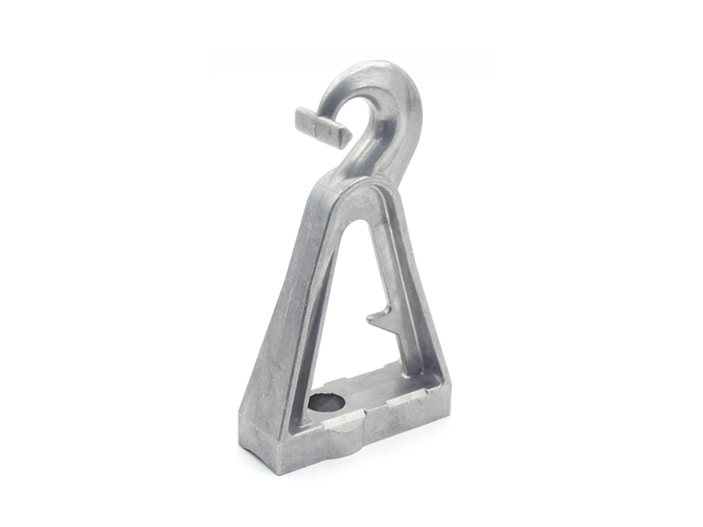
Aluminum brackets are widely used in industrial applications due to their excellent balance of strength, lightweight design, and durability. From machinery frames and electrical enclosures to automation systems and structural supports, the mechanical properties of aluminum brackets play a crucial role in ensuring safety, performance, and long-term reliability.
Strength and Load-Bearing Capacity
One of the most important mechanical properties of aluminum brackets is their ability to withstand mechanical loads. Through alloying and heat treatment, aluminum achieves high tensile and yield strength suitable for many industrial applications.
Aluminum brackets are designed to handle:
Static loads from equipment weight
Dynamic loads caused by vibration and movement
Tensile and compressive forces in structural connections
Properly engineered aluminum brackets can safely support industrial equipment while maintaining structural stability.
High Strength-to-Weight Ratio
Aluminum offers an excellent strength-to-weight ratio compared to many traditional materials such as steel. Aluminum brackets typically weigh about one-third as much as steel brackets with comparable functionality.
This lightweight characteristic provides several advantages:
Reduced stress on supporting structures
Easier handling and installation
Lower transportation and assembly costs
These benefits are especially valuable in large-scale industrial installations and modular systems.
Elasticity and Deformation Resistance
Aluminum brackets exhibit good elasticity, allowing them to absorb minor impacts and vibrations without permanent deformation. This property is particularly important in industrial environments where machinery operates continuously and experiences cyclic loading.
Proper design helps aluminum brackets:
Resist bending and distortion
Maintain dimensional stability
Reduce fatigue-related failures
Fatigue Resistance in Industrial Use
In many industrial applications, brackets are subjected to repeated loading and unloading cycles. Aluminum alloys offer reliable fatigue resistance when designed within appropriate stress limits.
By controlling geometry, thickness, and load distribution, aluminum brackets can achieve long service life even in applications involving:
Machinery vibration
Repetitive motion
Temperature-induced expansion and contraction
Corrosion Resistance and Surface Durability
Although corrosion resistance is often considered a chemical property, it directly affects the mechanical integrity of aluminum brackets. Aluminum naturally forms a protective oxide layer that prevents rust and surface degradation.
This corrosion resistance:
Preserves structural strength over time
Reduces maintenance requirements
Enhances performance in outdoor or humid industrial environments
Thermal Performance and Stability
Aluminum brackets perform well across a wide temperature range. Their thermal conductivity and predictable thermal expansion help maintain mechanical stability in environments with temperature fluctuations.
This makes aluminum brackets suitable for applications such as:
Electrical equipment and enclosures
Industrial automation systems
Power and energy facilities
Common Industrial Applications of Aluminum Brackets
Due to their mechanical properties, aluminum brackets are widely used in:
Industrial machinery and equipment frames
Electrical panels and control cabinets
Conveyor systems and automation lines
Power distribution and electrical infrastructure
HVAC and mechanical support systems
Conclusion
The mechanical properties of aluminum brackets—high strength, lightweight structure, elasticity, fatigue resistance, and corrosion durability—make them an ideal choice for industrial applications. When properly designed and manufactured, aluminum brackets deliver reliable performance, reduced maintenance, and long-term cost efficiency.
Understanding these mechanical characteristics helps engineers and buyers select the right aluminum bracket solutions for demanding industrial environments.
FAQ
1. Are aluminum brackets strong enough for industrial applications?
Yes. Properly designed aluminum brackets made from industrial-grade aluminum alloys can safely support static and dynamic loads in many industrial applications. Their strength depends on alloy type, thickness, and structural design.
2. What aluminum alloys are commonly used for industrial brackets?
Common aluminum alloys include 6061, 6063, and 7075. These alloys offer a good balance of strength, machinability, and corrosion resistance, making them suitable for industrial brackets.
3. How does the strength of aluminum brackets compare to steel brackets?
Aluminum brackets generally have lower absolute strength than steel, but their high strength-to-weight ratio makes them highly efficient. In many applications, aluminum brackets provide sufficient load capacity with significantly reduced weight.
4. Do aluminum brackets perform well under vibration and repeated loading?
Yes. Aluminum brackets offer good fatigue resistance when properly designed. They are widely used in machinery and automation systems where vibration and cyclic loading are common.
5. Are aluminum brackets suitable for outdoor or humid industrial environments?
Yes. Aluminum naturally forms a protective oxide layer that resists corrosion. This makes aluminum brackets suitable for outdoor use and humid or mildly corrosive industrial environments.
6. Do aluminum brackets require special surface treatment?
In most cases, no additional surface treatment is required. However, anodizing or powder coating may be applied to enhance surface durability, appearance, or resistance to harsh environments.