
Introduction
Overhead transmission and distribution lines depend on a wide range of line hardware to maintain mechanical stability and electrical safety. Among these components, suspension clamps play a critical role in supporting conductors, controlling mechanical stress, and ensuring long-term system reliability. This article explains how suspension clamps function and why they are essential in modern power networks.
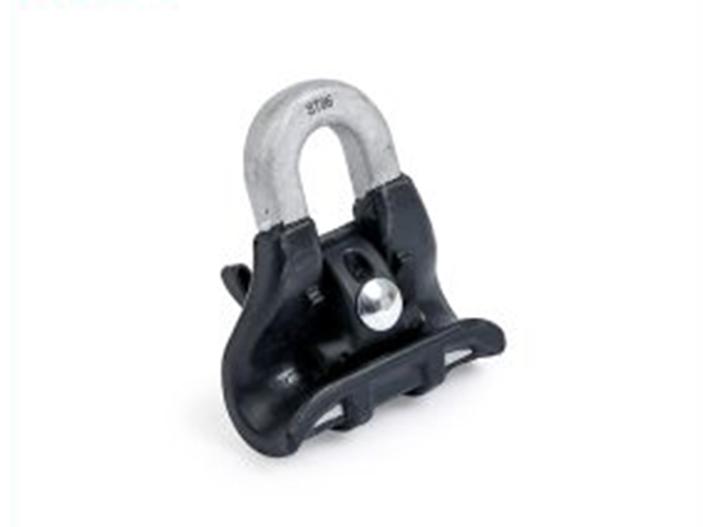
Importance of Suspension Clamps in Overhead Line Systems
Conductors in overhead lines are constantly subjected to:
Their own weight
Wind loads and vibration
Ice accumulation
Thermal expansion and contraction
Suspension clamps are designed to manage these forces by securely supporting the conductor while allowing limited movement. This balance helps prevent excessive stress and damage to both the conductor and the supporting structure.
Supporting Conductors Without Restricting Movement
One of the primary roles of a suspension clamp is to hold the conductor in position without fully restraining its longitudinal movement.
On straight-line sections, conductors must be free to expand and contract due to temperature changes.
Suspension clamps allow slight sliding or rotation, reducing internal stress within the conductor.
This feature is especially important in long-span transmission lines and regions with large temperature variations.
Reducing Mechanical Stress and Bending Fatigue
At support points, conductors are vulnerable to bending stress and fatigue caused by vibration and dynamic loading. Suspension clamps help to:
Distribute conductor weight evenly
Minimize sharp bending at attachment points
Reduce stress concentration on individual strands
Some suspension clamp designs include armor rods or elastomer inserts to further protect the conductor from wear and fretting.
Controlling Wind-Induced Vibration
Wind can cause conductors to vibrate continuously, leading to fatigue damage over time. Suspension clamps contribute to vibration control by:
Providing stable support at suspension points
Working together with vibration dampers and spacer systems
Allowing controlled movement that prevents rigid fixation
Effective vibration management significantly extends conductor service life.
Load Transfer to Poles and Towers
Suspension clamps act as the mechanical interface between the conductor and the supporting structure. They transfer vertical loads from the conductor into:
Insulator strings
Crossarms
Poles or transmission towers
Proper load transfer ensures that forces are evenly distributed throughout the line structure, maintaining alignment and stability.
Applications in Transmission and Distribution Lines
Suspension clamps are widely used in:
High-voltage transmission lines
Medium- and low-voltage distribution networks
Urban and rural overhead power systems
Fiber optic lines such as ADSS and OPGW
Their design varies depending on conductor size, voltage level, and mechanical loading conditions.
Material and Design Considerations
To meet outdoor and long-term performance requirements, suspension clamps are commonly manufactured from:
Hot-dip galvanized steel
Aluminum alloy
Ductile iron
Key design considerations include clamp grip strength, corrosion resistance, and compatibility with conductor materials.
Role in System Safety and Reliability
Although suspension clamps are relatively small components, their performance directly affects overall line safety. Properly selected and installed clamps help:
Prevent conductor slippage
Reduce fatigue-related failures
Improve operational reliability
Lower long-term maintenance costs
Conclusion
Suspension clamps play a vital role in overhead transmission and distribution lines by supporting conductors, managing mechanical stress, and enabling safe load transfer. Their ability to balance secure support with controlled movement makes them indispensable components in modern power infrastructure.
FAQ
Q1: Where are suspension clamps typically installed?
They are mainly used on straight-line sections where conductors do not require full tension anchoring.
Q2: How do suspension clamps differ from tension clamps?
Suspension clamps support conductors while allowing movement, whereas tension clamps fully anchor conductors at terminal or angle points.
Q3: Do suspension clamps require regular maintenance?
They require periodic inspection to check for corrosion, loosening, or wear, especially in harsh environments.