
Introduction
Suspension bridge cable clamps play a critical role in transferring loads between the main cable and vertical hangers while ensuring long-term structural stability. Although relatively small compared to other bridge components, their structural design directly affects load distribution, fatigue performance, and the overall safety of the suspension system.
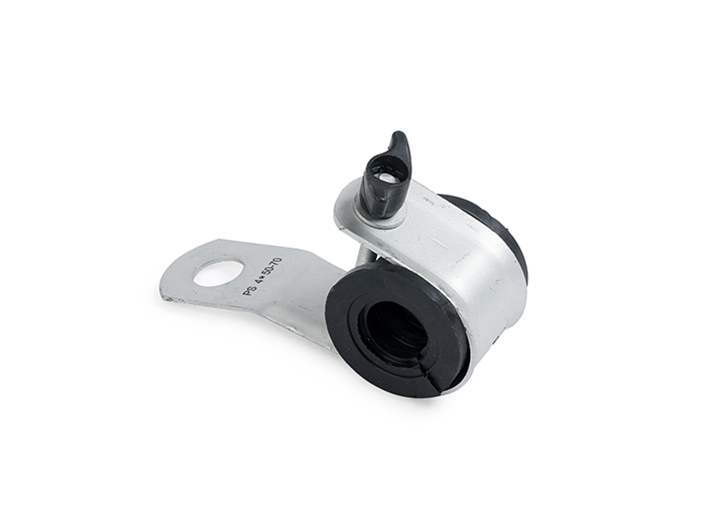
Role of Cable Clamps in Suspension Bridge Systems
In a suspension bridge, the main cables carry the majority of the dead load and live load from the bridge deck. Cable clamps are used to connect hanger ropes or suspenders to the main cable without damaging the cable strands.
Structurally, a cable clamp serves three key functions:
Load transfer: Transmitting vertical loads from hangers into the main cable.
Position control: Maintaining accurate hanger spacing and alignment.
Structural protection: Avoiding local stress concentration or slippage on the main cable surface.
Because clamps operate under continuous static loads and cyclic traffic loads, their structural design must balance strength, stiffness, and long-term durability.
Load Transfer Mechanism of Cable Clamps
1. Force Transmission Path
The load transfer process typically follows this path:
Vertical load from the bridge deck is carried by the hanger.
The hanger force is transferred to the cable clamp body.
The clamp distributes this force circumferentially around the main cable.
The main cable carries the load toward the anchorages and towers.
To achieve uniform force distribution, clamp halves are precisely machined to match the curvature of the main cable, ensuring full contact and minimizing local stress peaks.
2. Friction and Clamping Force
Cable clamps rely primarily on frictional resistance rather than mechanical penetration. High-strength bolts generate sufficient clamping force, creating friction between the clamp lining and the cable surface.
Key design considerations include:
Bolt pretension level
Contact surface roughness
Friction coefficient between lining material and cable wires
Insufficient clamping force may cause slip, while excessive force risks damaging the cable strands. Therefore, torque control during installation is critical.
Structural Design Features for Stability
1. Split Clamp Configuration
Most suspension bridge cable clamps adopt a split-body design, consisting of two or more clamp segments bolted together. This configuration allows:
Easy installation on completed main cables
Uniform radial pressure around the cable
Flexibility to accommodate cable diameter tolerances
The symmetrical structure improves overall stability and reduces eccentric loading.
2. High-Strength Materials
Cable clamps are commonly manufactured from high-strength carbon steel or alloy steel, providing:
High load-bearing capacity
Excellent fatigue resistance
Reliable performance under dynamic loads
Surface treatments such as hot-dip galvanizing or advanced coating systems are applied to improve corrosion resistance, especially in marine or high-humidity environments.
3. Stress Distribution and Fatigue Control
Finite element analysis (FEA) is often used during the design stage to evaluate stress distribution within the clamp body and bolts. Rounded fillets, optimized bolt spacing, and adequate wall thickness help reduce stress concentration and improve fatigue life.
Stability Under Long-Term Service Conditions
1. Resistance to Slip and Rotation
Under repeated traffic loading, temperature changes, and wind-induced vibration, cable clamps must maintain their position without slipping or rotating along the main cable. Structural stability is achieved through:
Proper bolt pretension
Anti-slip lining materials
Controlled surface contact pressure
2. Environmental Influences
Environmental factors such as temperature variation, moisture, and corrosion can affect clamp performance over time. A stable clamp design accounts for:
Thermal expansion compatibility
Long-term bolt preload retention
Protective coatings for harsh environments
Regular inspection ensures early detection of bolt loosening or surface degradation.
Design Standards and Quality Control
Suspension bridge cable clamps are designed and manufactured according to strict engineering standards and project specifications. Typical quality control measures include:
Material certification and mechanical testing
Dimensional accuracy inspection
Bolt pretension verification
Load testing or proof testing when required
These measures ensure that each clamp performs reliably throughout the bridge’s service life.
Conclusion
The structural design of suspension bridge cable clamps is essential for safe load transfer and long-term stability in suspension bridge systems. By combining optimized geometry, controlled frictional clamping, high-strength materials, and rigorous quality control, cable clamps can effectively support complex loading conditions while protecting the integrity of the main cable.
Although often overlooked, well-designed cable clamps are a key component in ensuring the durability and safety of large-span suspension bridges.
FAQ
Q1: Do cable clamps damage the main cable?
No. Properly designed clamps rely on friction and lining materials rather than direct contact with sharp edges, preventing damage to cable strands.
Q2: How is clamp slip prevented over time?
Slip is prevented through controlled bolt pretension, suitable lining materials, and regular inspection during service.
Q3: Can cable clamps be customized for different cable diameters?
Yes. Cable clamps are typically custom-designed to match specific cable diameters and project load requirements.