
Introduction
In Aerial Bundled Cable (ABC) systems, overhead line termination is one of the most critical points in the entire power distribution network. These cables are subjected to maximum mechanical tension, environmental stress, and long-term load conditions.
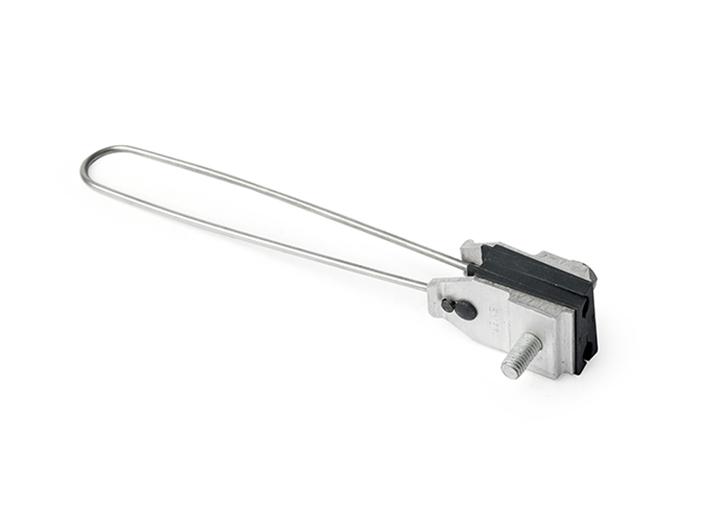
This is where the 4 core dead end clamp becomes indispensable. It plays a key role in securing cables, maintaining system stability, and ensuring safe, reliable operation over time.
What Happens at Overhead Line Termination?
Overhead line termination refers to the point where an ABC cable:
Changes direction or connects to another line
Transfers mechanical load to a fixed structure
At these points, the cable is no longer freely suspended—it must be anchored firmly to withstand tension and environmental forces.
Without proper anchoring, the system becomes vulnerable to cable sagging, slippage, or even failure.
Provides Critical Mechanical Strength
The primary reason 4 core dead end clamps are essential is their ability to handle high mechanical loads.
Prevent excessive sagging between poles
Maintain structural stability under wind and vibration
By securely anchoring the cable, these clamps ensure that the overhead line remains stable even under dynamic conditions.
Ensures Secure Cable Anchoring
A 4 core dead end clamp is specifically designed to lock the cable in place:
Self-adjusting wedge mechanisms tighten under tension
Firm grip prevents movement or slippage
This secure anchoring is especially important in overhead systems where cables are exposed to continuous external forces.
Protects Cable Insulation and Integrity
One of the biggest risks at termination points is damage to cable insulation.
High-quality dead end clamps are designed to:
Distribute pressure evenly across all four cores
Avoid sharp points that could cut insulation
Maintain the electrical integrity of the cable
This ensures that the cable remains safe from short circuits, leakage, or premature failure.
Withstands Harsh Environmental Conditions
Overhead line terminations are fully exposed to the environment. A 4 core dead end clamp is built to resist:
UV radiation from sunlight
Rain, humidity, and corrosion
Temperature fluctuations and thermal expansion
Durable materials such as UV-resistant polymers and galvanized steel ensure long-term performance in outdoor conditions.
Enhances Overall System Safety
Safety is a major concern in power distribution systems. Dead end clamps contribute by:
Preventing cable due to anchor failure
Reducing the risk of electrical faults
Ensuring stable conductor positioning
A properly installed clamp minimizes hazards for both maintenance personnel and end users.
Supports Efficient Network Design
In addition to safety and strength, these clamps enable more efficient system layouts:
Allow longer spans between poles
Support directional changes in cable routing
Facilitate organized and compact installations
This makes them essential for both urban infrastructure and rural electrification projects.
Simplifies Installation and Maintenance
Modern 4 core dead end clamps are designed for ease of use:
Quick installation with minimal tools
Self-locking mechanisms reduce human error
Easy inspection and low maintenance requirements
This helps reduce labor costs and improves installation efficiency in large-scale projects.
Prevents Common Termination Failures
Without a reliable dead end clamp, several issues may arise:
Cable slippage under tension
Uneven load distribution leading to conductor damage
Premature wear or insulation failure
Using a properly designed clamp effectively eliminates these risks.
Adapts to Modern Power Distribution Needs
As power systems evolve, overhead networks require more reliable components. 4 core dead end clamps are continuously improving with:
Stronger and lighter materials
Enhanced gripping technology
Better resistance to environmental stress
These improvements make them even more critical in today’s high-demand electrical infrastructure.
Conclusion
The 4 core dead end clamp is a vital component in overhead line termination, providing the strength, stability, and safety required for reliable ABC cable systems. From mechanical loads to protecting insulation and ensuring secure anchoring, its role cannot be replaced.
For any overhead power distribution project, using high-quality dead end clamps is not just recommended—it is essential for long-term performance, safety, and efficiency.
FAQ
Q1: Why are dead end clamps necessary at termination points?
Because termination points the highest mechanical stress and require secure anchoring to prevent failure.
Q2: What makes a 4 core clamp different?
It is specifically designed to handle four bundled conductors, ensuring balanced load distribution.
Q3: Can overhead lines function without dead end clamps?
No, without proper anchoring, cables would be unstable and unsafe.
Q4: How do these clamps improve system lifespan?
By preventing mechanical damage and maintaining cable integrity, they significantly extend service life.