
Introduction
Overhead line systems are a critical part of electrical power transmission and distribution. These systems rely on strong, efficient, and reliable connections to ensure continuous power flow across long distances. Among the key components used in these networks are aluminum tube connectors, which play an essential role in joining conductors and maintaining system integrity.
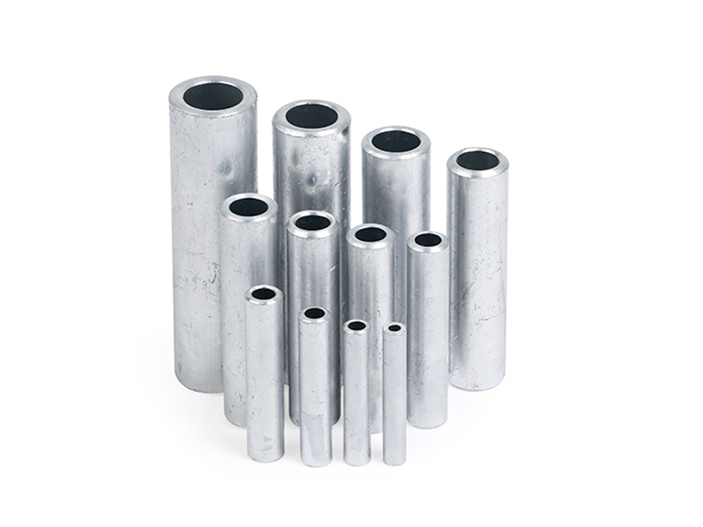
What Are Aluminum Tube Connectors?
Aluminum tube connectors are cylindrical compression connectors designed to join aluminum conductors. Installed using crimping tools, they create a secure mechanical bond and a low-resistance electrical path, making them ideal for overhead line applications where reliability is crucial.
Role of Aluminum Tube Connectors in Overhead Line Systems
1. Conductor Splicing
One of the primary uses of aluminum tube connectors is to splice two conductors together.
Used when extending transmission lines
Applied during repair of damaged conductors
Ensures continuity of electrical flow
The compression process creates a solid connection that minimizes electrical resistance and prevents energy loss.
2. Repair and Maintenance of Power Lines
Overhead lines are exposed to environmental factors such as wind, temperature changes, and mechanical stress. Aluminum tube connectors are widely used in maintenance work to:
Replace damaged sections of conductors
Restore electrical continuity quickly
Reduce downtime in power systems
Their ease of installation makes them ideal for field repairs.
3. Supporting High-Voltage Transmission
Aluminum is commonly used in overhead lines due to its lightweight and good conductivity. Aluminum tube connectors are specifically designed to match these conductors, ensuring:
Efficient current transfer
Minimal voltage drop
Stable performance under high loads
This makes them suitable for both medium- and high-voltage applications.
4. Ensuring Mechanical Strength
In overhead systems, connectors must withstand mechanical tension and environmental stress. Aluminum tube connectors provide:
Strong mechanical grip after compression
Resistance to vibration and movement
Long-term structural stability
This helps prevent conductor separation or failure.
5. Reducing Line Weight
Weight is a critical factor in overhead line design. Heavy components can increase stress on poles and towers. Aluminum tube connectors offer a lightweight solution that:
Reduces load on support structures
Improves installation efficiency
Enhances overall system safety
6. Corrosion Resistance in Outdoor Environments
Overhead lines are constantly exposed to weather conditions such as rain, humidity, and pollution. Aluminum tube connectors:
Naturally resist corrosion due to oxide formation
Can be treated with coatings for added protection
Maintain performance over long service periods
This durability is essential for outdoor electrical infrastructure.
Installation Process in Overhead Applications
Proper installation is critical to ensure performance:
Cable Preparation: Clean and strip the conductor ends
Connector Selection: Choose the correct size for the conductor
Insertion: Insert conductors fully into the connector tube
Crimping: Use a compression tool to apply uniform pressure
Inspection: Check for proper deformation and secure connection
Correct installation ensures both electrical efficiency and mechanical reliability.
Advantages in Overhead Line Systems
Aluminum tube connectors provide several advantages:
Lightweight and easy to handle
Cost-effective for large-scale projects
Compatible with aluminum conductors
Reliable under mechanical and environmental stress
Suitble for high-voltage and long-distance transmission
Common Applications
In overhead line systems, aluminum tube connectors are used in:
Power transmission lines
Distribution networks
Rurl electrification projects
Renewable energy connections (solar and wind farms)
Utility infrastructure upgrades
Conclusion
Aluminum tube connectors are essential components in overhead line systems. Their ability to provide strong mechanical connections, efficient electrical conductivity, and long-term durability makes them a preferred choice in power transmission and distribution.
By ensuring proper selection and installation, these connectors help maintain the safety, reliability, and efficiency of overhead electrical networks.
FAQ
1.Why are aluminum connectors used in overhead lines?
Because they are lightweight, cost-effective, and compatible with aluminum conductors commonly used in transmission systems.
2.Are aluminum tube connectors suitable for high-voltage applications?
Yes, they are widely used in medium- and high-voltage overhead line systems.
3.How are aluminum tube connectors installed?
They are installed using compression or crimping tools to create a secure connection.
4.Do these connectors require maintenance?
They require minimal maintenance but should be inspected periodically for mechanical integrity.
5.What happens if a connector is improperly installed?
It can lead to increased resistance, overheating, or mechanical failure, which may disrupt the power supply.