
Introduction
Fuse cutouts have long been a cornerstone of overhead power distribution, protecting transformers and lines from overcurrent and short-circuit faults. While their basic function has remained consistent, the materials and design technologies behind fuse cutouts have evolved significantly. From traditional porcelain constructions to advanced polymer composites, this evolution reflects the power industry’s demand for higher reliability, lower maintenance, and better performance in diverse environments.
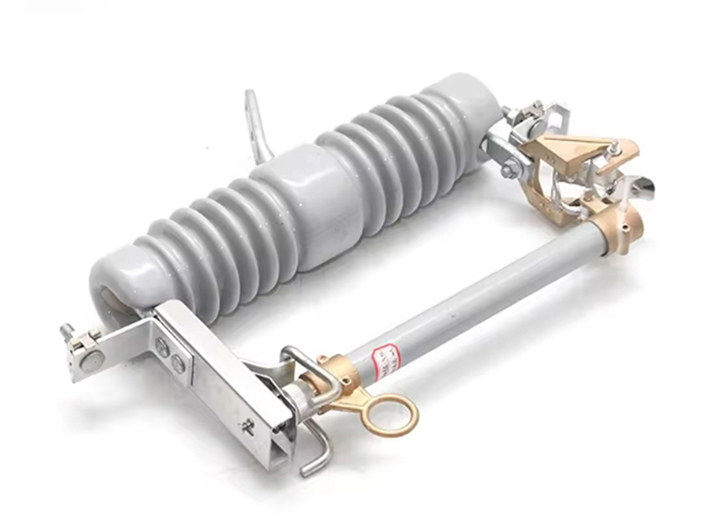
The Early Days: Porcelain as the Industry Standard
For decades, porcelain fuse cutouts dominated medium-voltage distribution systems. Utilities relied on porcelain because of its:
High dielectric strength
Excellent resistance to heat and weather
Strong mechanical durability
Proven long-term reliability
Porcelain insulators provided stable performance even in extreme outdoor conditions, making them ideal for rural electrification and expanding grid infrastructure in the 20th century.
Why Porcelain Was So Widely Adopted
At the time, porcelain offered the best balance between cost, durability, and insulation performance. Its glazed surface helped resist moisture and contamination, while its rigid structure ensured mechanical stability on overhead lines.
Even today, porcelain fuse cutouts remain widely used in many regions due to their long service life and field-proven performance.
Limitations of Traditional Porcelain Designs
Despite its strengths, porcelain is not without drawbacks:
Heavy weight, increasing installation difficulty
Brittleness, making it susceptible to cracking under impact
Handling challenges during transportation and installation
Limited performance in extremely polluted environments without maintenance
As power systems expanded into more demanding environments, these limitations encouraged the development of alternative materials.
The Shift Toward Polymer Materials
With advancements in material science, polymer (composite) fuse cutouts began to emerge as a modern alternative.
These cutouts typically use:
Silicone rubber housings
Fiberglass-reinforced cores
Lightweight composite structures
Key Advantages of Polymer Fuse Cutouts
Lightweight design: Easier transportation and installation
Improved pollution performance: Hydrophobic surfaces repel water and contaminants
Higher resistance to vandalism and impact
Better performance in coastal and industrial environments
This made polymer cutouts especially attractive for utilities operating in regions with high humidity, salt exposure, or heavy pollution.
Design Improvements Beyond Materials
The evolution of fuse cutouts is not just about materials—it also includes enhancements in design and functionality:
1. Improved Arc-Quenching Technology
Modern fuse tubes are designed to extinguish arcs more efficiently, reducing damage and improving safety.
2. Enhanced Drop-Out Mechanisms
More reliable and smoother operation ensures clear fault indication and quick isolation.
3. Better Contact Systems
Advanced contact materials reduce resistance, minimize heating, and extend service life.
4. Standardization and Compatibility
Modern cutouts are designed to meet international standards (IEC, ANSI), ensuring compatibility across different systems.
Porcelain vs. Polymer: A Comparative Overview
| Feature | Porcelain Fuse Cutouts | Polymer Fuse Cutouts |
| Weight | Heavy | Lightweight |
| Mechanical Strength | High (but brittle) | High (impact-resistant) |
| Pollution Performance | Good (with maintenance) | Excellent (self-cleaning effect) |
| UV Resistance | Excellent | Very good |
| Lifespan | Long, proven (20–30+ years) | Long, but varies by material quality |
| Maintenance | Moderate | Low |
Both technologies have their place, and utilities often choose based on environmental conditions, cost considerations, and maintenance strategies.
Current Trends in Fuse Cutout Technology
Today, the market reflects a balance between traditional reliability and modern innovation:
Continued use of porcelain in stable and less polluted environments
Increasing adoption of polymer cutouts in coastal and industrial regions
Integration with smart grid monitoring systems (in some advanced applications)
Focus on longer service life and reduced maintenance costs
Manufacturers are also investing in hybrid designs that combine the strengths of both materials.
Choosing Between Traditional and Modern Solutions
When selecting between porcelain and modern materials, utilities should consider:
Environmental conditions (pollution, humidity, temperature)
Installation and handling requirements
Long-term maintenance costs
System voltage and load characteristics
There is no one-size-fits-all solution—the best choice depends on the specific application.
Conclusion
The evolution of fuse cutout technology—from traditional porcelain designs to modern polymer materials—reflects the ongoing advancement of the power distribution industry. While new materials offer clear advantages in certain environments, porcelain fuse cutouts remain a trusted and reliable solution with decades of proven performance.
As technology continues to develop, the future of fuse cutouts will likely focus on combining durability, intelligence, and efficiency, ensuring even greater reliability in global power networks.
FAQ
1. Are porcelain fuse cutouts still used today?
Yes. They are still widely used due to their durability, reliability, and long service life, especially in less polluted environments.
2. Why are polymer fuse cutouts becoming more popular?
Because they are lighter, easier to install, and perform better in polluted or coastal environments due to their hydrophobic surfaces.
3. Which type lasts longer: porcelain or polymer?
Porcelain has a longer proven track record (often 20–30+ years), while polymer lifespan depends on material quality and environmental conditions.
4. Are modern fuse cutouts more expensive?
Polymer cutouts can be slightly more expensive upfront, but they may reduce installation and maintenance costs over time.
5. Can porcelain and polymer cutouts be used in the same network?
Yes, many utilities use both types depending on location and environmental requirements within the same distribution system.