
Introduction
In modern electrical infrastructure, reliable connections between cables and equipment are essential for safe and efficient power transmission. One critical component that ensures this reliability is the bimetal cable lug, also known as a Cu-Al connector. These lugs are designed to join copper and aluminum conductors safely, solving common challenges in power distribution systems.
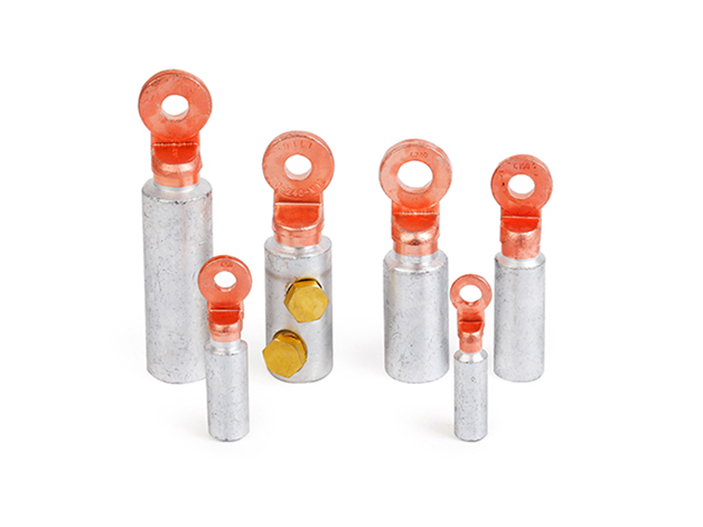
What Are Bimetal Cable Lugs?
A bimetal cable lug is a specially engineered terminal that combines two metals—copper and aluminum—in one connector. The copper side is designed to connect copper cables, while the aluminum side connects aluminum cables. This design prevents galvanic corrosion, which occurs when two dissimilar metals come into direct contact and react electrochemically, causing oxidation, high resistance, and overheating.
Key Advantages of Bimetal Cable Lugs
1. Prevention of Galvanic Corrosion
Direct contact between copper and aluminum can quickly lead to corrosion, reducing the lifespan of the connection. Bimetal lugs act as a transition interface, preventing corrosion and ensuring a stable connection over time.
2. Enhanced Electrical Conductivity
Bimetal lugs provide low-resistance connections, minimizing energy loss and heat buildup. This ensures consistent performance in high-current power transmission and distribution systems.
3. Mechanical Strength and Durability
These lugs are designed to withstand mechanical stress, vibration, and thermal expansion, making them ideal for industrial and utility-scale applications where cables may experience physical movement.
4. Improved Safety
By reducing resistance and preventing overheating, bimetal cable lugs enhance operational safety, lowering the risk of fire hazards or equipment failure in distribution networks.
5. Compatibility with Standard Equipment
Bimetal lugs can be used with standard busbars, terminals, and electrical panels. Their compliance with IEC, UL, or ANSI standards ensures safe integration into existing power systems.
6. Cost-Effective Solution
Although slightly more expensive than single-metal lugs, the long-term benefits—reduced maintenance, fewer replacements, and decreased downtime—make bimetal lugs a cost-effective choice for utilities and industries.
Common Applications in Power Transmission and Distribution
Substations – Connecting copper and aluminum busbars safely.
Transformers – Ensuring stable connections between conductors of different metals.
Industrial Facilities – Heavy machinery requiring high-current, reliable connections.
Renewable Energy Installations – Solar and wind power systems with mixed copper and aluminum cabling.
Installation Tips for Maximum Performance
Match the copper side to copper cables and aluminum side to aluminum cables.
Use recommended crimping tools and follow the torque specifications.
Inspect connections periodically for signs of loosening or corrosion.
Apply anti-oxidation compounds if recommended in humid or corrosive environments.
Conclusion
Bimetal cable lugs offer a reliable, safe, and efficient solution for connecting copper and aluminum conductors in power transmission and distribution systems. By preventing galvanic corrosion, ensuring low-resistance connections, and enhancing mechanical durability, these lugs play a vital role in maintaining system reliability and safety. For utilities, industrial facilities, and renewable energy projects, investing in high-quality bimetal lugs can save costs and prevent operational issues in the long term.
FAQ
Q1: What is a bimetal cable lug?
A: A bimetal cable lug is a connector designed to join copper and aluminum conductors safely. It has a copper side for copper cables and an aluminum side for aluminum cables, preventing galvanic corrosion.
Q2: Why are bimetal lugs important in power transmission and distribution?
A: They prevent galvanic corrosion, ensure low-resistance connections, improve safety by reducing overheating, and provide mechanical durability in high-current systems.
Q3: Can I use a regular copper or aluminum lug for copper-to-aluminum connections?
A: No. Using single-metal lugs for dissimilar metals can cause corrosion, high resistance, and overheating. Bimetal lugs are specifically designed for such connections.
Q4: What are the main advantages of bimetal cable lugs?
A: Key advantages include corrosion prevention, enhanced electrical conductivity, mechanical strength, improved safety, compatibility with standard equipment, and cost-effectiveness over time.
Q5: Where are bimetal cable lugs commonly used?
A: They are widely used in substations, transformers, industrial machinery, and renewable energy installations like solar and wind systems.