
Introduction
As global power systems move toward sustainability, environmental responsibility is becoming an important factor in electrical equipment design and manufacturing. Lightning arresters, as critical components in power protection systems, are also evolving toward more eco-friendly materials and production processes.
Today, manufacturers are not only focused on performance and reliability but also on reducing environmental impact across the product lifecycle—from raw materials and production to installation and disposal.
Why Sustainability Matters in Electrical Protection Equipment
Lightning arresters are widely used in:
Power transmission and distribution networks
Substations
Industrial plants
Renewable energy systems
Telecommunications infrastructure
Because these devices are installed in large numbers and operate outdoors for long periods, their environmental footprint can be significant.
Sustainable manufacturing helps:
Reduce environmental pollution
Improve resource efficiency
Extend product lifecycle
Support green energy initiatives
Meet international environmental regulations
As renewable energy expands, the demand for eco-friendly electrical components continues to grow.
Key Eco-Friendly Materials Used in Lightning Arresters
1. Silicone Rubber Housing Materials
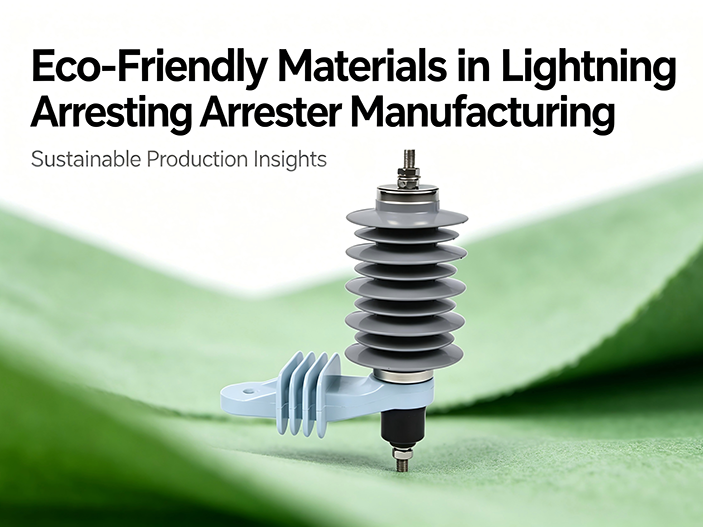
One of the most important eco-friendly advancements in lightning arrester design is the use of silicone rubber housings.
Compared to traditional materials, silicone rubber offers:
Excellent weather resistance
Strong UV stability
Long service life
Non-toxic and environmentally safer composition
High hydrophobic performance (self-cleaning ability)
This reduces the need for frequent maintenance and replacement, lowering overall environmental impact.
2. Metal Oxide Varistors (MOA Technology)
Modern lightning arresters commonly use metal oxide varistors (mainly zinc oxide-based materials) as the core surge protection element.
Benefits include:
No spark gaps required
High energy absorption efficiency
Stable electrical performance
Reduced material waste over time
Long operational lifespan
Because they operate without continuous discharge, MOA-based arresters are more efficient and environmentally friendly than older technologies.
3. Porcelain Alternatives with Reduced Environmental Impact
While porcelain arresters are still used in some systems, newer designs aim to:
Reduce raw material consumption
Improve firing efficiency during production
Minimize emissions in manufacturing processes
Enhance recyclability after service life
However, polymer-based designs are generally considered more eco-friendly overall.
4. Eco-Friendly Composite Insulation Materials
Advanced composite materials are increasingly used to replace heavier and less sustainable alternatives.
These materials provide:
Lower energy consumption during production
Reduced transportation emissions due to lighter weight
Better recyclability
Improved durability in harsh environments
Environmental Benefits of Modern Lightning Arresters
1. Longer Service Life Reduces Waste
High-quality polymer lightning arresters last longer, reducing the frequency of replacement and material disposal.
2. Reduced Maintenance Requirements
Self-cleaning and weather-resistant materials lower the need for chemical cleaning agents and maintenance activities.
3. Lightweight Design Lowers Carbon Footprint
Lighter products reduce transportation energy consumption and installation emissions.
4. Improved Energy Efficiency in Manufacturing
Modern production techniques focus on reducing energy use, emissions, and material waste during manufacturing.
Eco-Friendly Manufacturing Practices
Sustainability in lightning arrester production is not only about materials but also about processes.
Leading manufacturers adopt:
Energy-efficient production lines
Waste recycling systems
Low-emission coating technologies
Water-saving manufacturing processes
RoHS and REACH compliance standards
These practices help reduce the overall environmental impact of production.
Application in Renewable Energy Systems
Eco-friendly lightning arresters are especially important in renewable energy projects such as:
Solar Power Systems
They protect inverters and panels while aligning with the sustainability goals of solar energy.
Wind Power Systems
They ensure reliable operation in harsh outdoor environments while minimizing maintenance needs.
Energy Storage Systems
They provide stable surge protection for battery storage infrastructure.
By using environmentally responsible materials, these systems maintain a fully green energy lifecycle.
Key Advantages of Eco-Friendly Lightning Arresters
Reduced environmental impact
Improved durability and reliability
Lower lifecycle cost
Better performance in harsh environments
Compliance with global environmental regulations
Support for sustainable energy infrastructure
Future Trends in Green Lightning Protection Technology
The future of lightning arrester manufacturing is moving toward:
Fully recyclable materials
Bio-based insulation composites
Smart monitoring systems for predictive maintenance
Lower carbon footprint production methods
Integration with smart grid technologies
These innovations will make surge protection systems more efficient and environmentally responsible.
Conclusion
Eco-friendly materials in lightning arrester manufacturing are transforming the way power protection systems are designed and deployed. From silicone rubber housings and metal oxide technology to sustainable production processes, the industry is steadily moving toward greener and more efficient solutions.
As global energy systems continue to evolve, environmentally responsible lightning arresters will play an increasingly important role in supporting safe, reliable, and sustainable power infrastructure.
FAQ
1. What makes a lightning arrester “eco-friendly”?
An eco-friendly lightning arrester is designed using sustainable materials and cleaner manufacturing processes that reduce environmental impact, such as recyclable components, low-toxicity materials, and energy-efficient production methods.
2. Which materials are considered eco-friendly in lightning arresters?
Common eco-friendly materials include:
Silicone rubber housing materials
Zinc oxide (metal oxide varistor technology)
Lightweight composite insulation materials
Improved low-emission porcelain alternatives
3. Why is silicone rubber used in modern lightning arresters?
Silicone rubber is widely used because it is:
Durable and weather-resistant
UV and pollution resistant
Long-lasting (reduces replacement waste)
Safer and more environmentally friendly compared to traditional materials
4. Are metal oxide lightning arresters environmentally friendly?
Yes. Metal oxide varistor (MOA) technology eliminates the need for spark gaps, improves energy efficiency, and provides long service life, which reduces material waste and maintenance frequency.