
Introduction
In overhead power transmission and distribution systems, dead end clamps are critical components that secure conductors at line terminations, angle points, and tensioned spans. One of their most important functions is to prevent conductor slippage, ensuring long-term line stability and safety.
What Is Conductor Slippage?
Conductor slippage occurs when an overhead conductor moves within its clamp under mechanical stress. Slippage can be caused by:
High tensile loads from long spans
Wind-induced vibrations
Ice or snow accumulation
Thermal expansion and contraction
If slippage occurs, it can lead to line sag, tension imbalance, or even conductor failure, compromising the safety and reliability of the network.
The Role of Dead End Clamps
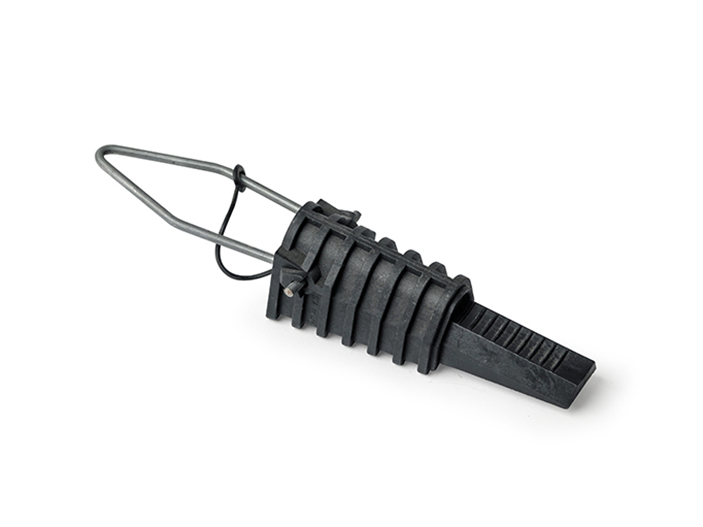
Dead end clamps, also called tension clamps, are designed to anchor conductors firmly at the line ends. Their key functions include:
Transferring tensile load from the conductor to poles, towers, or insulators
Maintaining proper conductor alignment and tension
Preventing slippage even under extreme environmental conditions
By securely holding the conductor, dead end clamps reduce maintenance requirements and protect the integrity of the overhead line.
How Dead End Clamps Prevent Slippage
Dead end clamps prevent conductor slippage through a combination of mechanical design, material selection, and frictional force. Key mechanisms include:
Wedge-Type Self-Locking Design
Many dead end clamps use a wedge or jaw mechanism. When tension is applied, the conductor presses into the wedge, increasing friction automatically. The higher the tensile force, the tighter the grip, creating a self-locking effect that prevents movement.
Preformed Helical Grips
Some clamps feature preformed helical armor rods that wrap around the conductor. These rods:
Distribute stress evenly along the conductor
Increase contact area
Prevent localized compression or strand damage
This design enhances grip without compromising conductor integrity.
Surface Contact and Friction
The clamp’s internal surfaces are machined or treated to maximize friction. Protective inserts may be used for fiber optic or aluminum conductors to:
Reduce conductor strand damage
Maintain consistent grip under vibration and thermal cycling
Friction between the conductor and clamp is critical to preventing slippage over long-term use.
Load Distribution
A well-designed clamp distributes tensile force uniformly across the conductor and clamp body, preventing stress concentration points that could lead to slippage or deformation.
Materials That Enhance Grip
The materials used in dead end clamps also influence anti-slippage performance:
High-strength aluminum alloys: Light, corrosion-resistant, compatible with aluminum conductors
Galvanized steel: High tensile strength, suitable for heavy loads and steel-reinforced conductors
Polymer inserts: For delicate or fiber optic conductors, preventing damage while maintaining grip
Material choice ensures both mechanical security and durability in harsh outdoor environments.
Installation Best Practices to Prevent Slippage
Even the best-designed clamp can fail if installed incorrectly. Key installation practices include:
Matching the clamp size to the conductor type and diameter
Following manufacturer torque recommendations
Ensuring clean, debris-free contact surfaces
Using compatible pole hardware to avoid uneven load transfer
Correct installation maximizes the clamp’s self-locking performance and long-term reliability.
Applications Where Anti-Slip Performance Is Critical
Dead end clamps are especially important in applications such as:
End-of-line terminations for distribution networks
Angle poles where the line changes direction
Long-span or high-tension lines
Fiber optic overhead conductors (ADSS / OPGW)
In these scenarios, preventing conductor slippage is essential for line safety and operational efficiency.
Conclusion
Dead end clamps prevent conductor slippage through mechanical design, self-locking mechanisms, friction, and proper load distribution. Their performance is enhanced by high-quality materials and correct installation practices.
Using certified dead end clamps and following best practices ensures stable, secure, and long-lasting overhead line operation, protecting both infrastructure and personnel.
FAQ
1. What causes conductor slippage in overhead lines?
Conductor slippage is caused by tensile stress, wind vibration, ice loads, or thermal expansion, which can move the conductor within its clamp if the clamp is not properly designed or installed.
2. How do dead end clamps prevent conductor slippage?
Dead end clamps prevent slippage through self-locking wedge designs, preformed helical grips, frictional contact surfaces, and uniform load distribution. The higher the tension, the tighter the conductor is held, creating a reliable grip.
3. Are all dead end clamps equally effective at preventing slippage?
No. Effectiveness depends on:
Clamp design and geometry
Contact area and friction
Material selection (aluminum alloy, galvanized steel, or polymer inserts)
Proper installation
4. Can dead end clamps be used on aluminum, copper, and fiber optic conductors?
Yes. Different clamps or inserts are used to match conductor type:
Aluminum and copper conductors require anti-corrosion, high-friction surfaces
ADSS or OPGW fiber optic cables often use polymer inserts to prevent strand damage while maintaining grip