
Introduction
In overhead power line systems, strain clamps play a critical role in anchoring conductors and withstanding mechanical tension at key such as dead-ends and angle poles. As electrical networks expand and operate under increasingly demanding conditions, the need for high-performance strain clamps has become more important than ever.
The reliability of these components largely depends on two factors: material selection and engineering design. This article explores how advanced materials and innovative design features contribute to the durability, safety, and efficiency of modern strain clamps.
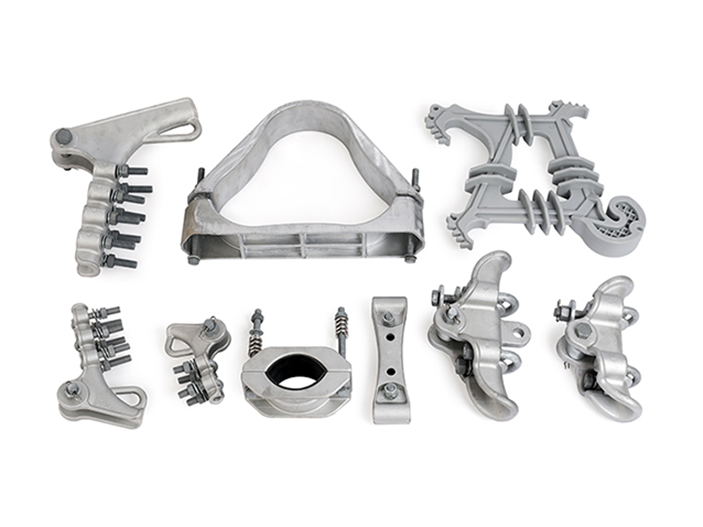
Importance of Material Selection in Strain Clamps
The materials used in strain clamps directly affect their mechanical strength, corrosion resistance, and service life. High-performance clamps are typically made from the following:
1.1 Galvanized Steel
Galvanized steel is widely used for its excellent strength and durability.
Advantages:
High tensile strength for heavy-load applications
Strong resistance to mechanical deformation
Protective zinc coating prevents rust and corrosion
Applications:
Ideal for high-voltage transmission lines and harsh outdoor environments.
1.2 Aluminum Alloy
Aluminum alloys offer a balance between strength and lightweight performance.
Advantages:
Lightweight, reducing load on support structures
Good corrosion resistance
High conductivity compatibility with aluminum conductors
Applications:
Commonly used in medium- and low-voltage distribution systems.
1.3 High-Strength Engineering Plastics
Advanced polymer materials are increasingly used in modern strain clamp designs.
Advantages:
Excellent insulation properties
Resistant to UV radiation and weathering
Lightweight and easy to install
1.4 Composite Materials
Some high-end strain clamps combine multiple materials to optimize performance.
Advantages:
Enhanced mechanical strength and flexibility
Improved environmental resistance
Longer service life under extreme conditions
Key Design Features of High-Performance Strain Clamps
Beyond materials, the design of a strain clamp determines how effectively it performs under real-world conditions.
2.1 Self-Adjusting Gripping Mechanism
Modern strain clamps often feature automatic or self-adjusting grips that adapt to different conductor sizes.
Benefits:
Ensures secure holding without damaging the conductor
Reduces installation errors
Improves load distribution
2.2 Anti-Slip and High-Friction Surfaces
To prevent conductor slippage, high-performance clamps include specially designed gripping surfaces.
Benefits:
Increased friction between clamp and cable
Enhanced safety under high tension
Reliable performance during wind or vibration
2.3 Corrosion-Resistant Coatings
Even strong base materials can fail without proper surface protection.
Common Coatings:
Hot-dip galvanization
Powder coating
Anti-UV treatments for polymer parts
Benefits:
Extended service life
Reduced maintenance requirements
Reliable operation in coastal or industrial environments
2.4 Ergonomic and Installation-Friendly Design
Ease of installation is a key consideration in modern infrastructure projects.
Features:
Tool-free or minimal-tool installation
Lightweight structure for faster handling
Clear assembly design to reduce human error
Benefits:
Saves labor time and cost
Improves installation consistency
Enhances safety for workers
2.5 Compatibility with Insulators and Fittings
High-performance strain clamps are designed to integrate seamlessly with other line hardware.
Benefits:
Ensures system stability
Simplifies installation planning
Improves overall network efficiency
2.6 High Load-Bearing Capacity
Design Considerations:
Reinforced structural components
Optimized load distribution geometry
Tested according to international standards
Performance Factors in Harsh Environments
Strain clamps are often exposed to challenging environmental conditions, including:
Extreme temperatures
High humidity and rain
UV radiation
Strong winds and ice loads
High-performance designs address these challenges through:
Weather-resistant materials
Thermal stability
This ensures consistent performance and reduces the risk of failure over time.
Choosing the Right High-Performance Strain Clamp
When selecting a strain clamp for your project, consider:
Conductor type and diameter
Mechanical load requirements
Environmental conditions
Installation method
Compliance with IEC or other standards
Choosing the right combination of materials and design features is essential for ensuring long-term reliability.
Conclusion
High-performance strain clamps are essential components in overhead power line systems, providing the strength and stability needed to anchor conductors under tension. By combining advanced materials with innovative design features, modern strain clamps deliver superior durability, safety, and efficiency.
As power networks continue to evolve, investing in well-engineered strain clamps is a crucial step toward building resilient and long-lasting electrical infrastructure.
FAQ
1. What is the most durable material for strain clamps?
Galvanized steel is highly durable for heavy-duty applications, while composite materials offer enhanced performance in extreme environments.
2. Are plastic strain clamps reliable?
Yes, high-quality engineering plastics are reliable, especially in insulated cable systems, due to their corrosion resistance and insulation properties.
3. How do strain clamps prevent cable damage?
They use optimized gripping mechanisms that distribute pressure evenly and reduce stress on the conductor.
4. Do strain clamps require maintenance?
Minimal maintenance is needed, but periodic inspection is recommended to ensure continued performance.
5. Can one strain clamp fit all conductor types?
No, strain clamps must be selected based on conductor size, material, and application requirements.