
Introduction
In overhead power transmission and distribution systems, mechanical strength is one of the most critical performance indicators of aluminum cable dead end clamps. These clamps are responsible for anchoring conductors, resisting tensile forces, and maintaining line stability under long-term mechanical stress. This article explores the factors that determine the mechanical strength of overhead line aluminum cable dead end clamps and why it is essential for safe and reliable operation.
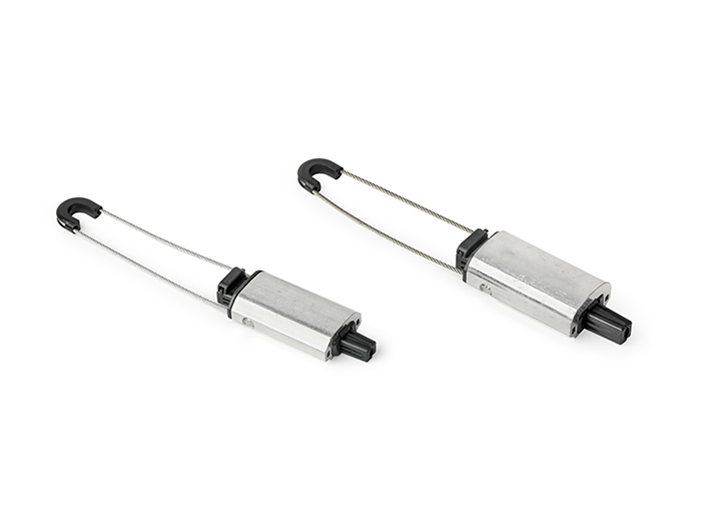
Why Mechanical Strength Matters in Overhead Lines
Overhead lines are continuously exposed to:
Conductor self-weight
Wind load and vibration
Ice and snow accumulation
Thermal expansion and contraction
Dead end clamps must withstand these forces without slippage, deformation, or failure. Insufficient mechanical strength can lead to line sagging, conductor breakage, or even system outages.
Definition of Mechanical Strength in Dead End Clamps
Mechanical strength refers to the maximum tensile load a dead end clamp can safely carry while maintaining its structural integrity and grip on the conductor. It is usually expressed as:
Rated tensile strength
Percentage of conductor rated breaking strength (RBS)
High-quality aluminum cable dead end clamps are designed to reach 90–95% of the conductor’s rated breaking strength.
Key Factors Affecting Mechanical Strength
Material Quality of Aluminum Alloy
Aluminum cable dead end clamps are typically manufactured from high-strength aluminum alloys, which offer:
Excellent strength-to-weight ratio
Good corrosion resistance
Compatibility with aluminum conductors
Proper alloy selection ensures both mechanical durability and long service life.
Structural Design and Geometry
The clamp’s structural design directly influences its mechanical strength:
Reinforced clamp bodies improve load-bearing capacity
Smooth internal profiles reduce stress concentration
Balanced geometry ensures uniform force distribution
Well-designed structures prevent localized overload and premature failure.
Gripping Mechanism and Contact Area
The gripping system plays a crucial role in tensile performance:
Wedge-type or bolted grip designs increase friction under load
Larger contact areas reduce pressure on conductor strands
Self-locking mechanisms prevent slippage as tension increases
These features allow the clamp to maintain secure anchoring even under extreme conditions.
Connection to Supporting Structures
The mechanical interface between the clamp and the pole or tower—such as U-bolts or shackles—must match the clamp’s strength level. Weak or poorly matched connectors can limit overall load capacity.
Mechanical Testing and Performance Verification
Mechanical strength of aluminum cable dead end clamps is verified through standardized tests, including:
Tensile load testing
Slip resistance testing
Fatigue and vibration testing
These tests ensure compliance with international standards such as IEC, ASTM, and GB.
Mechanical Strength in Different Applications
Transmission Lines
High-voltage transmission lines require clamps with maximum tensile strength to handle long spans and high loads.
Distribution Networks
Although loads are lower, reliable mechanical performance is still essential for safety and stability.
Long-Span and Angle Installations
River crossings, valleys, and angle towers demand enhanced mechanical strength due to increased tension and directional forces.
Advantages of High-Strength Aluminum Cable Dead End Clamps
Secure anchoring of aluminum conductors
Reduced maintenance and replacement frequency
Improved line safety and reliability
Long-term performance in harsh outdoor environments
These advantages make them indispensable components in overhead line systems.
Conclusion
The mechanical strength of overhead line aluminum cable dead end clamps is a result of optimized material selection, structural design, and gripping mechanisms. High-strength clamps ensure stable anchoring, withstand extreme mechanical loads, and support the safe operation of modern power transmission networks.
Selecting certified aluminum cable dead end clamps with proven mechanical performance is essential for long-term system reliability.
FAQ
1. What determines the mechanical strength of an aluminum cable dead end clamp?
The mechanical strength is determined by aluminum alloy material quality, structural design, gripping mechanism, and the strength of connecting hardware. Uniform stress distribution and sufficient contact area are critical factors.
2. How strong should a dead end clamp be compared to the conductor?
A high-quality dead end clamp is typically designed to withstand 90–95% of the conductor’s rated breaking strength (RBS), ensuring secure anchoring under maximum operating conditions.
3. Can aluminum dead end clamps handle extreme weather conditions?
Yes. When properly designed and tested, aluminum cable dead end clamps can withstand strong winds, ice loads, temperature fluctuations, and long-term vibration without loss of performance.
4. Does increasing clamp size always improve mechanical strength?
Not necessarily. Efficient structural design and material distribution are more important than size alone. Oversized clamps with poor geometry may still suffer from stress concentration.