
Introduction
The insulator decides the insulation level and the flashover risk of every overhead line. Three constructions dominate the market—the pin insulator, the suspension (disc) insulator, and the composite (polymer) insulator—and each suits a different voltage class and environment. Specifying the wrong type leads to flashovers in pollution, mechanical failure under wind, or simply an overspent bill.
This guide compares the three, shows how to choose by system voltage, and explains how the IEC 60815 pollution class drives the required creepage distance.
Pin, Suspension and Composite Insulators Explained
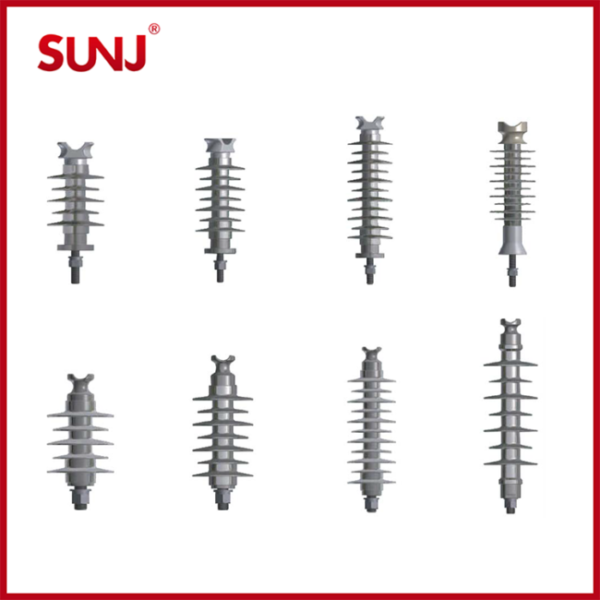
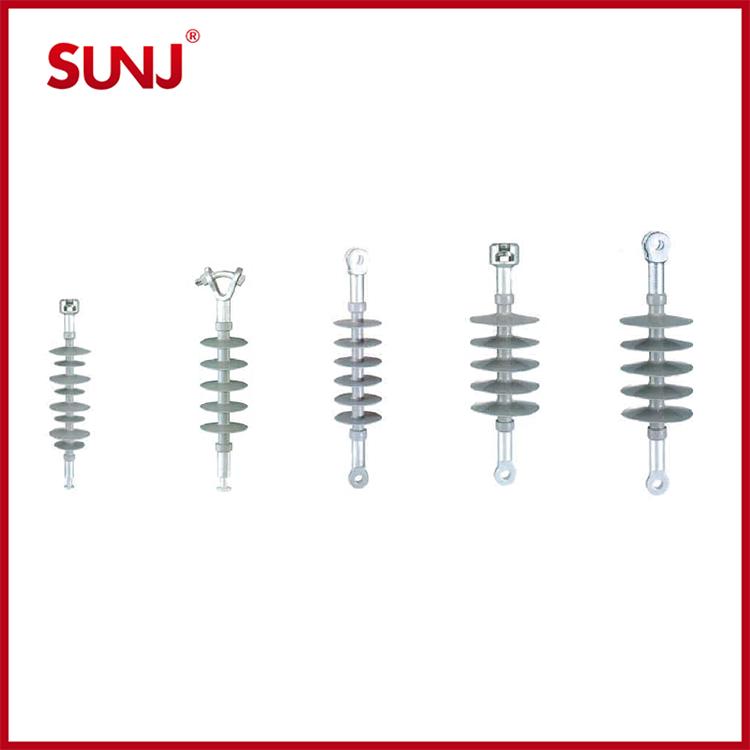
Pin insulator: a single rigid body mounted directly on the cross-arm. Used on 11–33 kV distribution lines; simple, cheap, and easy to install.
Suspension / disc insulator: one or more disc units strung in series from the tower. Used on 66 kV and above; the string length (number of discs) is increased for higher voltage or heavier pollution. See our dead-end insulator and disc insulator.
Composite (polymer) insulator: a fiberglass core sheathed in silicone rubber weather sheds. Covers the full voltage range with superior anti-pollution performance. See our polymer insulator and suspension insulator.
Pin vs Suspension vs Composite: The Comparison
| Factor | Pin | Suspension / disc | Composite |
|---|---|---|---|
| Voltage range | ≤ 33 kV | 66 kV and above | Full range |
| Mechanical strength | Medium | High (string) | Medium–high |
| Pollution performance | Medium | Medium (add discs) | Excellent |
| Weight | Medium | Heavy | Light |
| Cost | Low | Medium | Higher |
| Maintenance | Low | Medium | Low |
Selecting by System Voltage
- 11–33 kV distribution: pin insulators are the standard, cost-effective choice. In heavy-pollution zones, switch to a composite insulator of equivalent rating.
- 66 kV and above (transmission): use a suspension string of disc insulators; add discs for higher voltage or pollution. Composite suspension insulators are increasingly used for the same strings.
- Mixed / retrofit / seismic: composite insulators win on weight and anti-pollution where tower load or flashover risk is a concern.
Pollution Class and Creepage Distance (IEC 60815)
The required creepage distance rises with pollution severity. The four standard classes:
| Pollution class | Typical environment | Min. creepage (mm/kV) |
|---|---|---|
| Light (I) | Clean rural, low salinity | ≤ 18 |
| Medium (II) | Agricultural, moderate dust | 22 |
| Heavy (III) | Coastal, salt-fog, industrial | 25 |
| Very heavy (IV) | Severe salt, cement, smoke | 31 |
Composite insulators achieve high creepage from longer, closely-spaced sheds, so they are the natural choice for Class III–IV without adding discs.
Which Insulator Should You Specify?
- 11–33 kV, benign inland: porcelain pin insulator—lowest cost.
- 11–33 kV, coastal / industrial: composite pin insulator—resists pollution flashover.
- 66 kV+ transmission: suspension string sized by voltage + pollution class.
- Seismic / crane-limited towers: composite—light weight cuts dynamic load.
Installation & Sizing Checklist
- Confirm system voltage and the line’s highest operating voltage.
- Determine the site pollution class per IEC 60815 and the required creepage distance.
- Pick the insulator type: pin (≤33 kV), suspension/disc (66 kV+), or composite (any, esp. polluted).
- For disc strings, set the number of discs = voltage/pollution requirement.
- Verify mechanical rating against wind, ice and line tension; pair with the correct suspension / strain clamp.
- Inspect sheds and fittings before stringing; torque all hardware to spec.
FAQ
Q: Can a pin insulator be used on a 66 kV line?
A: Not normally. Pin insulators top out around 33 kV; 66 kV and above use suspension disc strings (or composite equivalents).
Q: What does IEC 60815 pollution class mean?
A: It classifies site contamination (light to very heavy) and sets the minimum creepage distance the insulator must provide to avoid flashover.
Q: Why choose composite over porcelain?
A: Composite insulators are lighter, shed pollution better, and do not shatter—ideal for coastal, industrial and seismic zones.
Q: How many discs for a 132 kV string?
A: Typically 7–9 standard discs, more in heavy pollution; confirm against the required creepage and system voltage.
Q: Are pin and suspension insulators interchangeable?
A: No. They mount differently and serve different voltage classes; the fitting and string design differ.
Conclusion
The pin vs suspension vs composite insulator decision is settled by two numbers: the system voltage and the IEC 60815 pollution class. Pin for distribution, suspension disc for transmission, composite wherever weight or pollution dominates—select the creepage and mechanical rating correctly and the line stays energised through every storm and salt season.
Need a specification sheet? SUNJ manufactures pin, dead-end, disc, suspension and composite insulators for overhead lines. Browse the range or contact our engineers for a tailored selection.