
Introduction
Selecting the right surge arrester is one of the most consequential decisions in any 11 kV–33 kV distribution or sub-transmission project. A metal-oxide surge arrester—also called a lightning arrester—clamps dangerous overvoltages such as lightning strikes, switching surges, and temporary overvoltages down to a safe level, protecting transformers, switchgear, and cable terminations from catastrophic failure.
Yet many specifiers still default to “the same arrester we used last time” without weighing polymer vs porcelain construction, the maximum continuous operating voltage (MCOV), or the model code printed on the nameplate. This guide explains exactly how to choose between a polymer and a porcelain surge arrester, how to match the rating to your system voltage (11 kV, 22 kV, 33 kV), and how to read the model code so you can specify with confidence.
What Is the Difference Between Polymer and Porcelain Surge Arresters?
Both technologies use the same core: a stack of zinc-oxide (ZnO) varistor discs that conduct only when voltage exceeds a threshold. The real difference is the housing that protects and mechanically supports the varistor core.
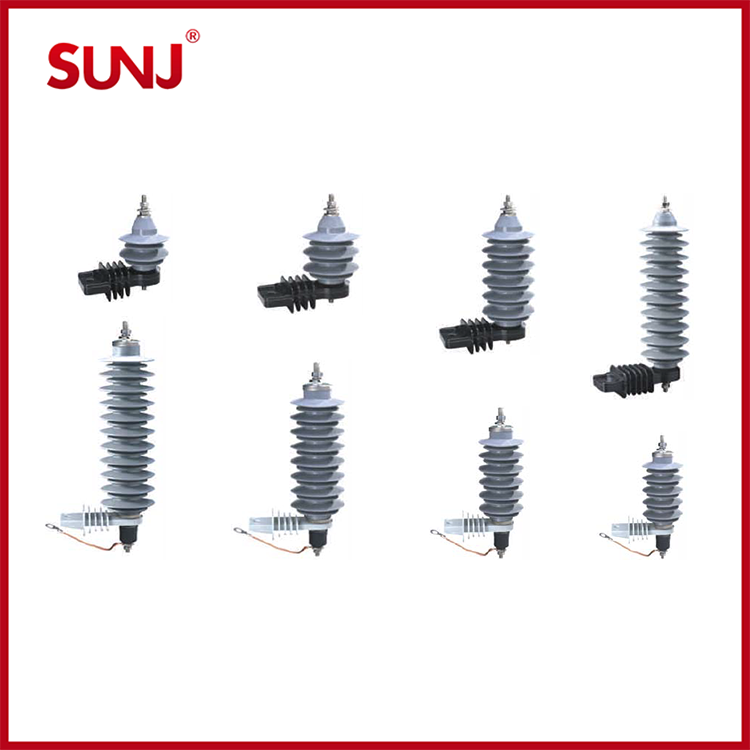
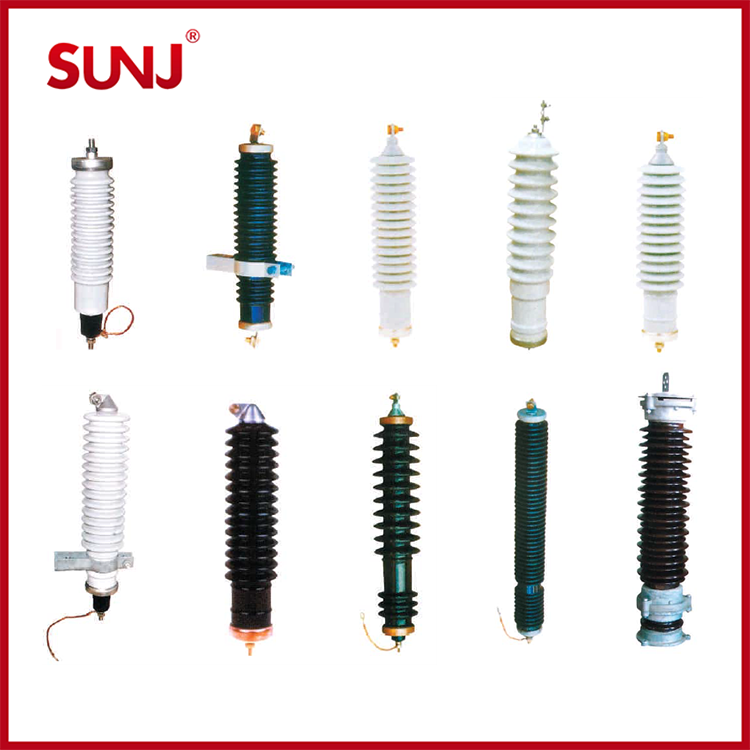
Porcelain (ceramic) surge arresters use a glazed ceramic insulator housing. They are rigid, time-proven, UV-stable, and usually the lowest-cost option for standard inland substations. The trade-offs are weight (roughly 3× heavier than polymer), brittleness—a failed unit can shatter—and poor performance in heavy pollution because ceramic sheds accumulate conductive dirt.
Polymer (composite / silicone-rubber) surge arresters use a fiberglass-reinforced core sheathed in silicone rubber weather sheds. They are about one-third the weight, inherently anti-pollution (silicone sheds shed water and dust), and explosion-proof (no shards if the core fails). That makes them the preferred choice for coastal, high-pollution, and seismic zones—and far easier to handle where crane access is limited. The purchase price is slightly higher, but total cost of ownership over a 20-year life is often lower.
Explore both constructions in our polymer surge arrester and porcelain surge arrester product lines.
Key Ratings You Must Understand: MCOV, Discharge Current & Residual Voltage
Reading the nameplate correctly starts with four ratings defined by IEC 60099-4:
| Rating | What it means | How to use it |
|---|---|---|
| MCOV (Max Continuous Operating Voltage) | The maximum rms voltage the arrester can withstand continuously without ageing. | Must be ≥ the system’s highest continuous phase-to-ground voltage (usually 1.05–1.1×). |
| Ur (Rated voltage) | The max temporary overvoltage the arrester survives for 10 s. | Roughly MCOV ÷ 0.8; the value printed as the first number in the model code. |
| In (Nominal discharge current) | Standard 8/20 µs current wave the arrester is rated for (typically 5 kA or 10 kA). | Use 10 kA for exposed or lightning-prone networks; 5 kA for protected urban feeders. |
| Residual voltage (Clamping voltage) | Voltage across the arrester at the nominal discharge current. | Lower = better protective level for your equipment. |
How to Select by System Voltage: 11 kV, 22 kV, 33 kV Networks
The first step is to convert the system line voltage to its phase-to-ground value (line voltage ÷ √3). The arrester’s MCOV must exceed this continuously-occurring voltage. The table below gives practical selection classes used across distribution networks:
| System voltage | Phase-to-ground | Min. MCOV | Typical rated Ur | Common class |
|---|---|---|---|---|
| 11 kV | ≈6.35 kV | ≥7.5 kV | 12 kV (Ur 12.7 kV) | 12/15 kV class |
| 22 kV | ≈12.7 kV | ≥14 kV | 24 kV (Ur 24 kV) | 24 kV class |
| 33 kV | ≈19 kV | ≥22 kV | 36 kV (Ur 42 kV) | 36 kV class |
Never undersize the MCOV—an arrester that sees continuous voltage above its MCOV will age prematurely and can fail. For the full range, see our high-voltage lightning arrester overview.
Decoding the Surge Arrester Model Code (e.g. YH5WZ-17/45)
The alphanumeric code on the nameplate looks cryptic but is standardized. Using YH5WZ-17/45 as an example:
| Segment | Meaning |
|---|---|
| Y / YH | Metal-oxide (zinc-oxide) arrester |
| 5 | Design sequence number |
| W | Gapless (W = “wu jian xi”, no series gap) |
| Z | Application type — Z = distribution; R = railway; X = transmission line |
| 17 | Rated voltage Ur in kV (MCOV ≈ 0.8 × Ur) |
| 45 | Residual (clamping) voltage at nominal discharge current, in kV |
So YH5WZ-17/45 is a gapless distribution-class ZnO arrester, rated 17 kV, with a 45 kV residual voltage—suitable for roughly a 15 kV-class system. Always cross-check the Ur against your system voltage using the table above.
Polymer or Porcelain: Which Should You Specify?
There is no universal winner—only the right fit for your environment:
- Coastal, salt-fog, or heavy-industrial pollution: choose polymer surge arresters. Silicone sheds resist pollution flashover far better than glazed ceramic.
- Seismic zones: polymer wins—light weight means lower dynamic loads and no risk of shattering.
- Remote or crane-limited sites: polymer is easier and safer to lift and install.
- Standard inland substations on a tight capital budget: porcelain surge arresters remain a proven, cost-effective choice.
- Life-cycle cost focus: polymer often wins on total cost of ownership despite a higher upfront price.
Installation & Sizing Checklist
- Confirm the system line voltage and compute phase-to-ground (÷ √3).
- Select MCOV ≥ 1.05–1.1 × the highest continuous phase-to-ground voltage.
- Choose the discharge class (5 kA standard, 10 kA for exposed networks).
- Verify creepage distance against the site pollution level per IEC 60815.
- Provide a solid, low-impedance earthing down-lead from the arrester base.
- Maintain the manufacturer’s specified phase-to-earth and phase-to-phase clearances.
- For polymer units, inspect sheds periodically for tracking or chalking.
FAQ
Q: Can I use a 10 kV arrester on an 11 kV system?
A: Yes—an 11 kV system is protected by a 12/15 kV-class arrester. The rule is never to undersize the MCOV relative to the phase-to-ground voltage, not to match the line voltage exactly.
Q: Which lasts longer, polymer or porcelain?
A: In polluted or coastal environments polymer lasts longer; in benign, dry inland stations porcelain performs reliably for decades. Site conditions decide.
Q: What does MCOV actually mean?
A: Maximum Continuous Operating Voltage—the highest rms voltage the arrester can carry continuously without accelerated ageing.
Q: How do I read YH5WZ-17/45?
A: ZnO gapless distribution arrester, rated 17 kV Ur, 45 kV residual voltage. See the decoding table above.
Q: Do I need a 5 kA or 10 kA arrester?
A: Use 10 kA for exposed, lightning-prone, or overhead-fed networks; 5 kA is sufficient for well-protected urban feeders.
Conclusion
The choice between a polymer and a porcelain surge arrester comes down to environment, handling constraints, and life-cycle cost—not just the sticker price. Match the MCOV and rated voltage to your 11 kV, 22 kV, or 33 kV system, confirm the discharge class and pollution rating, and the arrester will quietly protect your network for decades.
Need a specification sheet? SUNJ supplies both polymer and porcelain metal-oxide surge arresters for 11 kV–33 kV networks, fully tested to IEC 60099-4. Browse our lightning arrester range or contact our engineers for a tailored selection.