
Introduction
Suspension assembly clamps with brackets are essential components in overhead power, telecommunication, and mechanical systems. These clamps provide a secure connection point between cables, conductors, or rods and structural support elements, ensuring stability and reliable load transfer. While often overlooked, the design and application of these clamps directly affect system performance and safety.
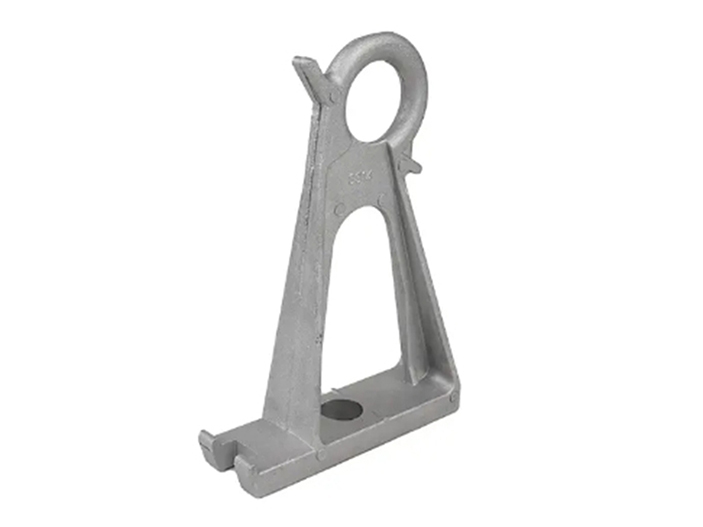
What Is a Suspension Assembly Clamp With Bracket?
A suspension assembly clamp with bracket is a mechanical device used to support and secure cables, conductors, or suspension rods to fixed structures such as poles, towers, or beams. The bracket serves as an interface between the clamp and the supporting structure, enabling easy attachment and load distribution.
Key characteristics include:
Versatility: Can support various types of cables or conductors.
Adjustability: Often allows minor alignment adjustments during installation.
Durability: Made to withstand environmental stress, mechanical loads, and vibration.
Structural Components of a Suspension Assembly Clamp With Bracket
A typical suspension assembly clamp with bracket consists of the following main parts:
1. Clamp Body
The clamp body is the primary component that grips the cable or conductor. It is designed to:
Provide uniform pressure around the cable without damaging strands.
Maintain alignment under tension and vibration.
Resist fatigue and mechanical wear over long-term service.
2.Bracket
The bracket connects the clamp body to structural supports such as poles, cross-arms, or beams. Features include:
Pre-drilled holes or slots for bolts.
Reinforced geometry to distribute loads evenly.
Flexibility to adapt to various installation angles and positions.
3. Bolts and Fasteners
High-strength bolts, nuts, and washers secure the clamp and bracket assembly. They are critical for:
Generating the necessary clamping force.
Maintaining position under cyclic loads.
Ensuring long-term stability and safety.
4.Lining or Cushion Materials
Some clamps include lining materials such as polymer inserts to:
Increase friction for secure grip.
Reduce wear on cables or conductors.
Absorb minor vibration and shocks.
Key Functions of Suspension Assembly Clamps With Brackets
Suspension assembly clamps with brackets perform several essential functions in overhead systems:
1. Load Transfer
The primary function is to transfer mechanical loads from the suspended cable, conductor, or rod to the supporting structure. Proper load transfer ensures:
Uniform stress distribution.
Reduced risk of cable slippage or deformation.
Enhanced structural stability.
2. Alignment and Position Control
Clamps maintain proper alignment and spacing of cables or conductors. This is critical for:
Avoiding tangling or contact between multiple conductors.
Ensuring aesthetic and functional precision in structured installations.
3. Vibration and Shock Resistance
Suspension systems are often exposed to wind, traffic, and environmental vibrations. Clamps with brackets:
Absorb minor vibrations.
Minimize mechanical fatigue on both the cable and the supporting structure.
4. Ease of Installation and Maintenance
Well-designed clamps allow for quick installation and adjustment, reducing labor costs and minimizing downtime. Brackets provide:
Convenient attachment points.
Flexibility to replace or realign cables without major disassembly.
Materials and Durability Considerations
Suspension assembly clamps with brackets are generally made of:
High-strength steel or alloy steel for mechanical load-bearing capacity.
Hot-dip galvanized or coated surfaces to resist corrosion.
Polymer or rubber linings to protect cables and reduce friction wear.
Durability is a key design consideration, especially for outdoor or coastal applications exposed to moisture, temperature variations, and UV radiation.
Applications of Suspension Assembly Clamps With Brackets
These clamps are widely used in:
Overhead power transmission and distribution lines
Telecommunication and fiber optic cable installations
Mechanical suspension systems in industrial plants
Bridge or structural cable assemblies
Their versatility and reliability make them an indispensable part of modern suspension systems.
Conclusion
Suspension assembly clamps with brackets are small but vital components in engineering systems that involve suspended cables or conductors. Their structural design, material selection, and functional features ensure secure load transfer, proper alignment, vibration resistance, and long-term durability. Understanding these elements is essential for engineers, project planners, and maintenance personnel to achieve safe and efficient installations.
FAQ
Q1: Can suspension assembly clamps with brackets be customized for different cable sizes?
Yes. Most clamps can be tailored to accommodate specific cable diameters, load requirements, and installation conditions.
Q2: Do these clamps require regular maintenance?
Periodic inspection is recommended to check bolt tension, corrosion, and lining wear, especially in outdoor or harsh environments.
Q3: What materials are commonly used for outdoor applications?
High-strength galvanized steel with polymer lining is commonly used to ensure mechanical strength and corrosion resistance.