
Introduction
Electrical grounding systems are the foundation of safe and stable power distribution. Whether in overhead lines, industrial facilities, or public infrastructure, grounding components must deliver low resistance, long-term reliability, and installation efficiency. Among modern grounding solutions, Insulation Piercing Ground Connectors (IPGCs) have become increasingly popular due to their performance and ease of use.
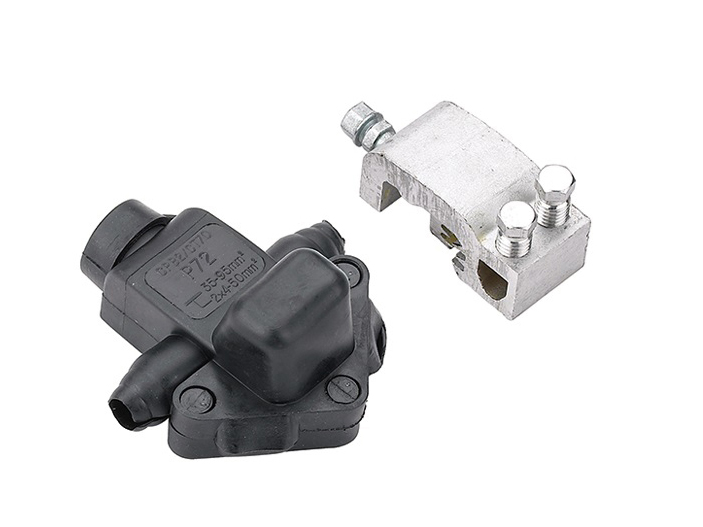
No Insulation Stripping Required
One of the most significant advantages of insulation piercing ground connectors is that they eliminate the need to strip cable insulation.
Piercing teeth penetrate the insulation and contact the conductor directly
Reduces installation time and labor costs
Minimizes the risk of conductor damage caused by improper stripping
Preserves insulation integrity around the connection point
This feature is especially valuable in overhead and confined-space installations.
Fast And Efficient Installation
IPGCs are designed for quick, error-resistant installation.
Simple positioning and bolt tightening
No special tools or cable preparation required
Ideal for large-scale grounding projects and field installations
Significantly improves work efficiency for utility and maintenance teams
Faster installation translates directly into reduced downtime and lower operational costs.
Consistent And Reliable Electrical Contact
Thanks to torque-controlled shear head bolts, insulation piercing ground connectors ensure stable and repeatable electrical performance.
Bolt heads break off at a preset torque
Guarantees optimal contact pressure every time
Prevents under-tightening or over-tightening
Maintains low contact resistance over long periods
This consistency is critical for grounding systems where reliability directly impacts safety.
Enhanced Safety for Installers and Systems
Safety is a core advantage of IPGCs.
Reduced handling of exposed conductors
Lower risk of accidental cuts or short circuits
Suitable for near-live or controlled live-line operations (following standards)
Minimizes human error during installation
By simplifying the installation process, insulation piercing ground connectors help protect both personnel and electrical systems.
Excellent Performance in Harsh Environments
Insulation piercing ground connectors are built for outdoor and industrial conditions.
UV-resistant insulated housings
Corrosion-resistant piercing contacts
Sealed interfaces to prevent moisture and dust ingress
Strong resistance to vibration and thermal cycling
These features make IPGCs ideal for long-term use in challenging environments such as utility poles, substations, and industrial plants.
Strong Mechanical Stability and Durability
Beyond electrical performance, IPGCs provide robust mechanical strength.
High clamping force ensures firm cable fixation
Resistant to loosening caused by vibration or temperature changes
Long service life with minimal maintenance
This durability ensures grounding continuity throughout the system’s lifecycle.
Wide Compatibility and Application Flexibility
Insulation piercing ground connectors are compatible with a broad range of conductors and systems.
Suitable for aluminum and copper conductors
Available in multiple size ranges
Compatible with low- and medium-voltage grounding systems
Easily integrated into existing infrastructure
Their flexibility makes them a universal solution for many grounding applications.
Reduced Maintenance and Lifecycle Costs
Once installed, IPGCs typically require no routine maintenance.
Stable contact pressure over time
Corrosion protection extends service life
Fewer connection failures and inspections
Lower maintenance requirements result in reduced total cost of ownership for electrical grounding systems.
Compliance with International Standards
High-quality insulation piercing ground connectors are designed to meet industry standards, such as:
IEC standards for electrical accessories
EN standards for overhead line fittings
Utility and grid operator specifications
Standards compliance ensures reliability, safety, and acceptance in global markets.
Ideal Solution for Modern Grounding Systems
With increasing demands for speed, safety, and reliability, insulation piercing ground connectors align perfectly with modern electrical system requirements. Their combination of easy installation, consistent performance, and long-term durability makes them an optimal choice for today’s grounding solutions.
Conclusion
The advantages of insulation piercing ground connectors extend far beyond convenience. By eliminating insulation stripping, ensuring consistent electrical contact, enhancing safety, and reducing maintenance costs, they significantly improve the performance and reliability of electrical grounding systems.
For utilities, contractors, and industrial users seeking an efficient and dependable grounding solution, insulation piercing ground connectors are a smart and future-ready choice.
FAQ
1. What makes insulation piercing ground connectors better than traditional grounding clamps?
Insulation piercing ground connectors do not require insulation stripping, which reduces installation time and the risk of conductor damage. Their torque-controlled bolts ensure consistent contact pressure, while traditional grounding clamps rely heavily on installer experience.
2. Do insulation piercing ground connectors affect cable insulation performance?
No. The piercing design is engineered to penetrate only where needed, maintaining overall insulation integrity. Sealing materials around the contact area help prevent moisture ingress and insulation degradation.
3. Are insulation piercing ground connectors suitable for outdoor grounding systems?
Yes. They are designed for harsh outdoor environments, featuring UV-resistant housings, corrosion-resistant contacts, and sealed structures that protect against water, dust, and temperature changes.
4. Can insulation piercing ground connectors be used with both copper and aluminum conductors?
Yes. Most IPGCs support aluminum, copper, and mixed conductor systems. Always confirm conductor material compatibility and size range before installation.
5. How does the shear head bolt improve installation quality?
The shear head bolt breaks off at a preset torque, ensuring the correct clamping force every time. This eliminates under- or over-tightening and guarantees stable electrical and grounding performance.
6. Are insulation piercing ground connectors maintenance-free?
In most applications, yes. Once installed, they provide long-term, vibration-resistant and corrosion-protected connections without the need for routine maintenance.