
Introduction
Aluminium alloy tension brackets are essential components in overhead power line systems, transmission and distribution networks, and other utility infrastructures. Designed to withstand high mechanical loads while maintaining long-term stability, these brackets play a critical role in securing conductors and ensuring safe, reliable line operation.
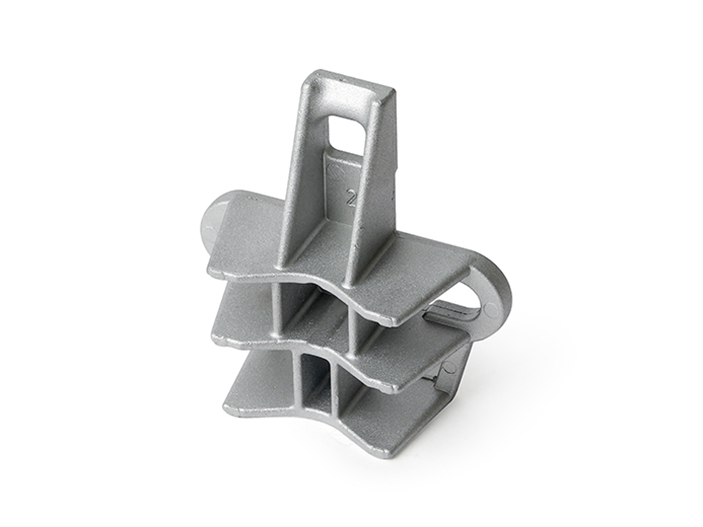
What Is an Aluminium Alloy Tension Bracket?
An aluminium alloy tension bracket is a mechanical line fitting used to anchor, terminate, or tension conductors in overhead line installations. It is typically mounted on poles or towers and works together with insulators, clamps, and other hardware to transfer mechanical load from the conductor to the supporting structure.
Structure of Aluminium Alloy Tension Brackets
1. Main Bracket Body
The main body is usually made from high-strength aluminium alloy, formed through casting or forging processes. It provides the core load-bearing capacity and structural support.
Key characteristics:
Optimized shape for stress distribution
Lightweight yet mechanically strong
Resistant to corrosion and environmental exposure
2. Mounting Holes or Slots
Mounting holes allow the bracket to be securely fixed to poles, crossarms, or towers using bolts or fasteners.
Functions:
Ensure precise alignment during installation
Enable compatibility with different support structures
Allow easy and secure assembly
3. Connection Interfaces
The connection interface links the tension bracket with insulators, dead-end clamps, or other line fittings.
Design features:
Smooth load transfer without sharp stress points
Standardized dimensions for system compatibility
High mechanical reliability under tension
4. Surface Treatment
Aluminium alloy tension brackets often feature surface treatments such as anodizing or passivation.
Benefits:
Enhanced corrosion resistance
Improved durability in harsh outdoor environments
Extended service life
How Aluminium Alloy Tension Brackets Work
Aluminium alloy tension brackets function by transferring the tensile force of the conductor to the supporting structure. When a conductor is tensioned, the force is transmitted through clamps and insulators to the bracket, which then distributes the load evenly onto the pole or tower.
This load transfer mechanism ensures:
Stable conductor positioning
Reduced mechanical stress on individual components
Safe operation under wind, ice, and temperature variations
Key Functions in Power Line Systems
Mechanical Load Support
Tension brackets bear the full tensile load of conductors at line terminations or angle points, ensuring structural stability.
Line Anchoring and Termination
They provide secure anchoring points for dead-end assemblies, preventing conductor movement or slippage.
System Safety Enhancement
By maintaining proper conductor tension and alignment, tension brackets reduce the risk of mechanical failure and line damage.
Long-Term Reliability
The corrosion-resistant aluminium alloy structure ensures consistent performance over extended service periods.
Advantages of Aluminium Alloy Tension Brackets
Lightweight design reduces installation labor
High strength-to-weight ratio
Excellent corrosion resistance
Suitable for harsh outdoor conditions
Compatible with modern transmission and distribution systems
Conclusion
Understanding the structure and function of aluminium alloy tension brackets highlights their importance in ensuring the mechanical integrity of overhead power lines. With a well-designed structure, reliable load transfer, and durable materials, these brackets play a vital role in modern power infrastructure.
As power grids expand and evolve, aluminium alloy tension brackets continue to be a preferred solution for achieving safe, efficient, and long-lasting line support.
FAQ
1. What is the main function of an aluminium alloy tension bracket?
The primary function of an aluminium alloy tension bracket is to anchor and support conductors under tension in overhead power line systems. It transfers mechanical loads from the conductor to poles or towers, ensuring line stability and safety.
2. Why are aluminium alloys used instead of steel for tension brackets?
Aluminium alloys offer a high strength-to-weight ratio, excellent corrosion resistance, and easier installation compared to steel. These advantages make aluminium alloy tension brackets ideal for outdoor and long-term power line applications.
3. Where are aluminium alloy tension brackets commonly used?
They are widely used in:
Overhead transmission and distribution lines
Pole and tower line terminations
Angle and dead-end structures
Utility and renewable energy power systems
4. Are aluminium alloy tension brackets suitable for harsh environments?
Yes. Aluminium alloy tension brackets are designed to withstand UV exposure, moisture, temperature fluctuations, and atmospheric corrosion, making them suitable for coastal, industrial, and high-humidity environments.