
Introduction
Voltage rating is one of the most important technical parameters when selecting a lightning arrester for any electrical system. It directly determines how effectively the arrester can protect equipment from lightning strikes and switching surges.
In power distribution, substations, industrial plants, and renewable energy systems, choosing the correct voltage-rated lightning arrester is essential for ensuring safety, reliability, and long service life.
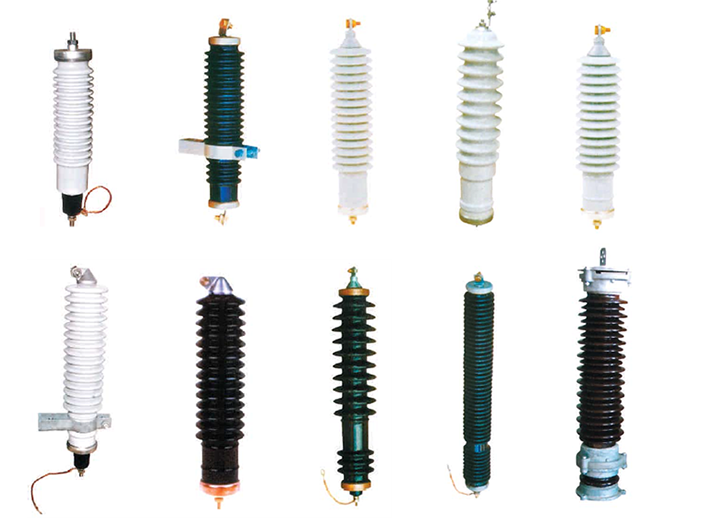
What Is a Lightning Arrester Voltage Rating?
The voltage rating of a lightning arrester refers to the maximum continuous operating voltage (MCOV) the arrester can withstand without conducting current under normal conditions.
In simple terms, it defines the highest voltage level the arrester can safely handle while remaining inactive during normal system operation.
When a surge (such as a lightning strike) occurs, the arrester temporarily becomes conductive and diverts excess energy to the ground, then returns to its normal insulating state.
Why Voltage Rating Is So Important
Selecting the correct voltage rating is critical because:
It ensures proper protection of electrical equipment
It prevents arrester overheating or premature failure
It avoids unnecessary system interruptions
It improves overall power system reliability
It ensures coordination with insulation levels
Incorrect voltage selection can lead to either insufficient protection or long-term damage to the arrester itself.
Key Voltage Parameters in Lightning Arresters
To understand voltage ratings properly, it is important to know the main electrical parameters involved.
1. Maximum Continuous Operating Voltage (MCOV)
UcU_cUc
MCOV represents the highest RMS voltage that can be continuously applied across the arrester terminals without causing conduction.
It must always be higher than the system’s normal operating voltage.
2. Rated Voltage (Ur)
UrU_rUr
Rated voltage is the voltage level the arrester can withstand under temporary overvoltage conditions (such as switching surges or system faults).
It is typically higher than MCOV and is used for coordination with system insulation design.
3. Protective Level (Residual Voltage)
UpU_pUp
Protective level is the maximum voltage that appears across the arrester terminals during surge discharge.
A lower protective level means better protection for downstream equipment.
How Voltage Ratings Work in Real Systems
In normal operation:
System voltage stays below MCOV
Lightning arrester remains non-conductive
During a surge event:
Voltage rises sharply above rated values
Arrester conducts and diverts surge current
Voltage is limited to protective level
System returns to normal after the event
This rapid response cycle is what ensures equipment safety.
How to Select the Right Voltage Rating
1. Match System Operating Voltage
The arrester’s MCOV must always be higher than the system’s maximum continuous voltage.
For example:
11 kV system → choose appropriate MCOV above operating level
33 kV system → higher MCOV and insulation coordination required
2. Consider System Overvoltage Conditions
Electrical systems may experience temporary overvoltages due to:
Switching operations
Fault conditions
Load variations
Lightning induction
The arrester must withstand these conditions without failure.
3. Check Insulation Coordination
The arrester must coordinate with equipment insulation levels to ensure:
Equipment is protected before insulation breakdown occurs
Surge energy is safely diverted
This is a key design principle in power system engineering.
4. Evaluate Application Environment
Different environments may influence voltage selection:
Coastal / polluted areas → higher stress conditions
Industrial zones → frequent switching surges
Renewable energy systems → fluctuating voltage conditions
Common Voltage Classes of Lightning Arresters
Lightning arresters are generally categorized into:
Low Voltage (LV)
Residential and small commercial systems
Basic surge protection
Medium Voltage (MV)
Distribution networks (e.g., 3.3 kV – 36 kV systems)
Industrial and utility applications
High Voltage (HV)
Transmission networks and substations
High-energy surge protection
Common Mistakes in Voltage Selection
1. Choosing Too Low MCOV
This can cause the arrester to conduct during normal operation, leading to overheating and failure.
2. Choosing Too High MCOV
This reduces protection effectiveness, allowing higher surge voltage to reach equipment.
3. Ignoring System Overvoltage Conditions
Temporary surges must always be considered in design.
4. Lack of Coordination with Equipment Insulation
Poor coordination can lead to equipment damage even if arrester is installed.
Why Proper Voltage Rating Selection Improves System Safety
Correct voltage selection ensures:
Stable system operation
Reliable surge protection
Longer equipment lifespan
Reduced maintenance costs
Improved safety for personnel and infrastructure
In modern power systems, even small mismatches in voltage rating can significantly affect reliability.
Conclusion
Understanding voltage ratings in lightning arresters is essential for designing safe and efficient electrical systems. Parameters such as MCOV, rated voltage, and protective level all work together to ensure proper surge protection.
By selecting the correct voltage-rated lightning arrester based on system conditions, environment, and application type, engineers can significantly reduce the risk of electrical failure and improve long-term system reliability.
Proper voltage selection is not just a technical requirement—it is a key foundation for electrical safety and infrastructure protection.
FAQ
1. What does the voltage rating of a lightning arrester mean?
The voltage rating refers to the level of electrical voltage the arrester can safely handle during normal operation and transient overvoltage conditions. It ensures the arrester does not conduct current under normal system voltage.
2. What is Maximum Continuous Operating Voltage (MCOV)?
MCOV is the highest voltage that can be continuously applied across the arrester terminals without causing it to conduct. It must always be higher than the system’s normal operating voltage.
3. What is the difference between MCOV and rated voltage?
MCOV: Normal operating limit where the arrester stays inactive
Rated voltage: The voltage level the arrester can withstand during temporary overvoltage conditions
Rated voltage is always higher than MCOV.
4. What is protective level in a lightning arrester?
Protective level (residual voltage) is the maximum voltage that appears across the arrester during surge discharge. It determines how well the arrester protects connected equipment.