
Introduction
In many industrial and infrastructure installations, securing cables, pipes, and equipment requires fastening systems that are both strong and resistant to harsh environmental conditions. A 304 stainless steel tie with buckle is one such solution widely used in industries such as power distribution, telecommunications, construction, and transportation.
Compared with traditional plastic cable ties, stainless steel banding systems offer superior durability, corrosion resistance, and load-bearing capacity. These characteristics make them ideal for applications where reliability and long-term performance are critical.
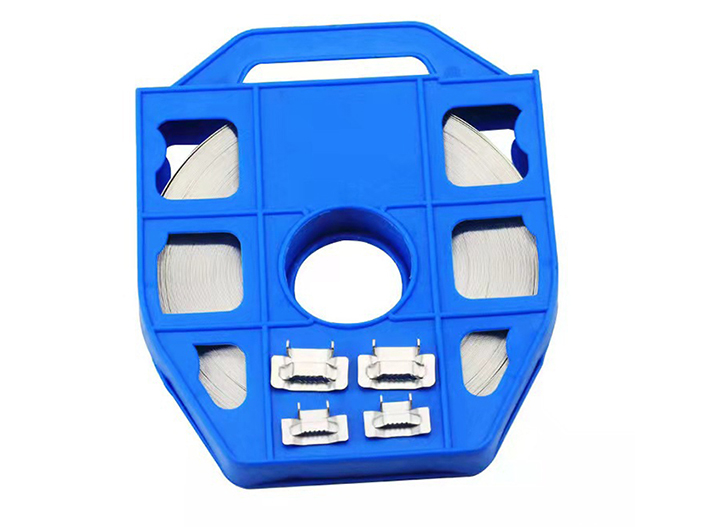
What Is a 304 Stainless Steel Tie With Buckle?
A 304 stainless steel tie with buckle is a fastening system composed of a stainless steel band (strap) and a locking buckle. The band wraps around the object being secured, and the buckle locks the band tightly in place.
This type of fastening system is often referred to as a stainless steel banding system. It is designed to provide strong mechanical support and maintain secure fastening even in environments exposed to moisture, vibration, or temperature changes.
Main Components
1.Stainless Steel Band
The band is a flat strip made from 304 stainless steel. It provides the primary holding force and is available in different widths and thicknesses depending on the application.
Key characteristics include:
High tensile strength
Corrosion resistance
Resistance to extreme temperatures
Long service life
2.Stainless Steel Buckle
The buckle acts as the locking mechanism that secures the band once tension is applied. It grips the band firmly to prevent loosening over time.
Buckles are designed to maintain strong holding power even under vibration or mechanical stress.
3.Banding Tool
A banding tool is commonly used during installation to tighten the band and cut off excess material. Using the proper tool helps ensure consistent tension and reliable fastening.
Material Characteristics of 304 Stainless Steel
304 stainless steel is one of the most commonly used stainless steel grades for industrial fasteners. It offers a balance between performance and cost.
Key material advantages include:
Excellent corrosion resistance in outdoor environments
Good mechanical strength
Resistance to oxidation and rust
Ability to withstand high and low temperatures
Because of these properties, 304 stainless steel ties are suitable for most industrial, electrical, and construction applications.
How Does a Stainless Steel Tie With Buckle Work?
The working principle of a stainless steel tie with buckle is based on mechanical tension and a locking mechanism that keeps the band firmly secured around the object.
Step-by-Step Installation Process
1.Wrap the Band Around the Object
The stainless steel band is wrapped around the item that needs to be secured, such as cables, pipes, poles, or mounting brackets.
2.Insert the Band Through the Buckle
The free end of the band is threaded through the buckle to prepare for tightening.
3.Tighten the Band
A banding tool pulls the band to apply tension. This step ensures that the band fits tightly around the object and provides secure support.
4.Lock the Buckle
Once the correct tension is reached, the buckle locks the band in place by gripping it firmly.
5.Trim Excess Band
The extra band is cut off to complete the installation, leaving a clean and secure fastening.
After installation, the system maintains strong holding power and resists loosening caused by vibration or environmental factors.
Key Advantages of 304 Stainless Steel Ties With Buckles
High Mechanical Strength
Stainless steel banding systems can withstand heavy loads and provide reliable support for industrial installations.
Strong Corrosion Resistance
304 stainless steel performs well in environments exposed to moisture, rain, and moderate chemical exposure.
Long Service Life
Unlike plastic cable ties that may degrade under UV exposure or temperature changes, stainless steel ties maintain their strength for many years.
Excellent Temperature Resistance
Stainless steel ties can function in both extremely cold and high-temperature environments without losing structural integrity.
Secure and Vibration Resistant
The buckle locking mechanism ensures the band remains tight even when exposed to vibration, movement, or mechanical stress.
Common Applications
304 stainless steel ties with buckles are widely used across multiple industries due to their durability and reliability.
Power and Electrical Systems
Securing cables on utility poles
Mounting electrical equipment
Fixing cable trays and conduits
Telecommunications
Securing fiber optic cables
Installing communication equipment on towers and poles
Construction and Infrastructure
Mounting signs and brackets
Securing pipes and structural components
Transportation and Municipal Projects
Road signs and signal installations
Bridge and infrastructure fastening systems
These applications often require fastening solutions that can withstand long-term outdoor exposure and mechanical stress.
304 vs 316 Stainless Steel Ties
In some cases, 316 stainless steel ties may be used instead of 304.
| Feature | 304 Stainless Steel | 316 Stainless Steel |
| Corrosion Resistance | Good | Excellent |
| Marine Environment | Moderate | Excellent |
| Cost | Lower | Higher |
| Typical Applications | Electrical and telecom installations | Marine and chemical environments |
For most standard industrial applications, 304 stainless steel offers a cost-effective and reliable solution.
Installation Tips
To achieve the best performance from stainless steel banding systems:
Use a proper banding tool for tightening and cutting.
Select the appropriate band width and thickness based on load requirements.
Avoid excessive tightening that could damage cables or pipes.
Choose 316 stainless steel for highly corrosive environments.
Following these practices helps ensure safe installation and long-term durability.
Conclusion
A 304 stainless steel tie with buckle is a durable and versatile fastening solution designed for demanding industrial environments. Its combination of mechanical strength, corrosion resistance, and temperature tolerance makes it suitable for applications in power distribution, telecommunications, construction, and infrastructure projects.
By using a simple yet effective band-and-buckle locking system, this fastening method provides secure and long-lasting support for cables, pipes, and equipment. When properly installed, stainless steel ties with buckles offer a reliable solution for maintaining stability and safety in various industrial installations.
FAQ
1.What is a stainless steel tie with buckle used for?
It is used to secure cables, pipes, signs, and equipment in industrial, electrical, and infrastructure installations.
2.Can 304 stainless steel ties be used outdoors?
Yes. They have good corrosion resistance and are suitable for most outdoor environments.
3.Do stainless steel banding ties require special tools?
A banding tool is recommended to ensure proper tension and a clean installation.
4.How strong are stainless steel banding ties?
They provide significantly higher tensile strength compared with plastic cable ties and are suitable for heavy-duty applications.
5.When should 316 stainless steel ties be used instead of 304?
316 stainless steel is recommended for marine environments or locations with high salt exposure and corrosive chemicals.