
Introduction
In overhead power distribution systems, maintaining conductor stability and mechanical strength is essential for safe and reliable electricity transmission. One key component used in aerial bundled cable (ABC) systems is the four-core tension clamp, also known as a dead end clamp or anchor clamp.
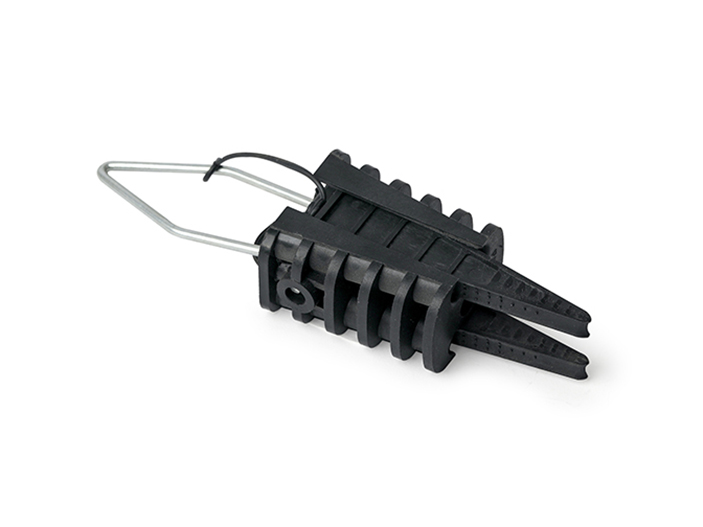
What Is a Four-Core Tension Clamp?
A four-core tension clamp is a mechanical anchoring device used to fix and support four-core aerial bundled cables in overhead power lines. It is typically installed at:
Line terminations
Pole ends
Sharp angle points
Junctions
Service entry connections
The clamp holds the insulated conductors firmly in place while withstanding the mechanical tension created by suspended cables.
Why Is It Used in Overhead Power Lines?
Overhead cables are constantly exposed to:
Wind load
Temperature changes
Ice and snow accumulation
Mechanical tension due to cable sag
Vibration from environmental factors
Without proper anchoring, cables may slip, sag excessively, or experience insulation damage. A four-core tension clamp ensures:
Stable cable positioning
Proper tension distribution
Reduced mechanical stress
Improved line safety
Main Components of a Four-Core Dead End Clamp
A typical four-core anchor clamp consists of:
3.1 Clamping Body
Usually made from high-strength UV-resistant engineering plastic or aluminum alloy. It houses the cable gripping mechanism.
3.2 Wedges or Gripping Inserts
These hold each insulated conductor securely. The self-adjusting wedge design increases grip as cable tension increases.
3.3 Stainless Steel Bail or Bracket
Used to connect the clamp to a pole bracket or hook, providing strong load-bearing capability.
How Does a Four-Core Tension Clamp Work?
The working principle is based on mechanical self-locking:
The four-core aerial bundled cable is inserted into the clamp body.
Internal wedges grip the cable insulation.
When tension is applied (due to cable weight and line pull), the wedges tighten automatically.
The more tension applied, the stronger the grip—preventing slippage.
This self-tightening design ensures reliable anchoring without damaging the cable insulation.
Key Features and Advantages
High Mechanical Strength
Designed to withstand line tension and environmental stress.
UV and Weather Resistance
Materials are engineered to resist sunlight, humidity, and temperature fluctuations.
Electrical Insulation
Non-metallic clamp bodies reduce the risk of electrical conduction and corrosion.
Easy Installation
Tool-free or simple installation reduces labor time.
Anti-Slip Design
Ensures firm cable grip without conductor damage.
Applications in Overhead Distribution Networks
Four-core tension clamps are widely used in:
Low-voltage ABC distribution lines
Rural electrification projects
Urban overhead power networks
Service line connections
Street lighting systems
They are particularly suitable for systems where phase and neutral conductors are bundled together.
Material Considerations
High-quality four-core tension clamps are typically made from:
UV-stabilized polymer materials
Glass fiber reinforced plastics
Aluminum alloy components
Stainless steel hardware
These materials ensure long-term durability and resistance to corrosion.
Safety and Compliance
Reliable tension clamps must meet:
Mechanical load standards
UV aging requirements
Environmental durability testing
Electrical insulation performance requirements
Choosing certified and tested clamps ensures compliance with utility and infrastructure safety standards.
Conclusion
A four-core tension clamp is an essential component in overhead power line systems. By securely anchoring aerial bundled cables and maintaining proper mechanical tension, it enhances line stability, reduces wear, and improves overall safety.
Its self-locking design, weather-resistant materials, and strong load-bearing capacity make it a critical solution for modern overhead distribution networks.
FAQ
1. What is the main purpose of a four-core tension clamp?
A four-core tension clamp is designed to secure and anchor four-core overhead cables at dead-end or angle points in power distribution lines. It withstands mechanical tension, prevents cable slippage, and maintains proper alignment under environmental loads such as wind, ice, and temperature fluctuations.
2. Where are four-core tension clamps typically used?
They are widely used in:
Low- and medium-voltage overhead distribution lines
Service line terminations
Pole-to-building connections
Network branching and corner installations
Rural and urban aerial bundled cable (ABC) systems
3. How does a four-core tension clamp work?
The clamp grips the insulated conductors using mechanical compression, wedge mechanisms, or bolted structures. Once installed:
The load is evenly distributed across all four cores
Tension forces are transferred to the pole or structure
Conductor insulation remains protected from mechanical damage
This ensures both mechanical stability and electrical safety.
4. What materials are commonly used in four-core tension clamps?
Typical materials include:
UV-resistant engineering plastics (for insulation and weather resistance)
Hot-dip galvanized steel (for high tensile strength and corrosion resistance)
Aluminum alloy components (for lightweight durability)
Material selection depends on voltage level, environment, and load requirements.
5. Are four-core tension clamps suitable for outdoor environments?
Yes. High-quality clamps are specifically designed for outdoor use and provide:
UV resistance
Corrosion resistance
Temperature tolerance
Long-term mechanical durability
They are engineered to perform reliably in harsh climates including coastal, high-humidity, and cold regions.
6. What is the difference between a tension clamp and a suspension clamp?
Tension (Dead End) Clamp: Anchors cables at termination or angle points and carries full mechanical load.
Suspension Clamp: Supports cables along straight runs without bearing full tension load.
Each serves a different mechanical function in overhead line systems.