
Introduction
When it comes to securing cables, pipes, and structural components in demanding conditions, choosing the right type of tie is critical. While plastic ties are commonly used for everyday applications, stainless steel ties are often the preferred choice in harsh environments. Their superior strength, durability, and resistance to extreme conditions make them a reliable solution for industrial, construction, and outdoor applications. This article explores why stainless steel ties outperform plastic ties in challenging conditions.
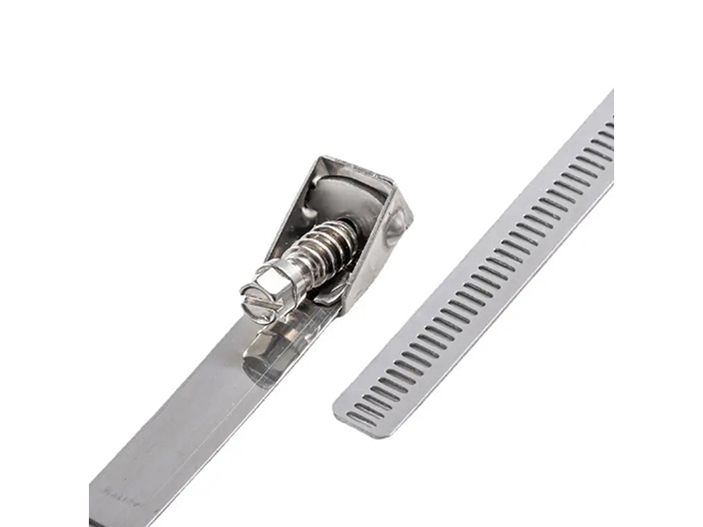
The Limitations of Plastic Ties
Plastic ties, also known as nylon or cable ties, are widely used due to their low cost and ease of installation. However, they have several limitations in harsh environments:
Temperature Sensitivity: Plastic ties can become brittle in extreme cold or soften in high heat, leading to breakage or deformation.
UV Degradation: Prolonged exposure to sunlight can cause plastic ties to weaken and crack.
Chemical Vulnerability: Contact with oils, solvents, or corrosive chemicals can deteriorate plastic ties over time.
Limited Strength: Plastic ties have lower tensile strength and are not suitable for heavy-duty applications or high-vibration environments.
These factors make plastic ties less reliable in outdoor, industrial, or high-stress applications.
Advantages of Stainless Steel Ties in Harsh Environments
1. Exceptional Strength and Load-Bearing Capacity
Stainless steel ties can secure heavy cables, pipes, and structural components that plastic ties cannot handle. They maintain integrity under tension, vibration, and mechanical stress.
2. Corrosion and Chemical Resistance
Made from high-grade stainless steel, these ties resist rust, corrosion, and chemical damage. They are ideal for outdoor, marine, and industrial environments where exposure to moisture and chemicals is common.
3. High-Temperature Tolerance
Unlike plastic ties, stainless steel ties can withstand extreme temperatures, from freezing cold to intense heat, without losing strength or flexibility.
4. Long-Term Durability
Stainless steel ties maintain their performance for years, reducing the need for frequent replacements and maintenance in harsh conditions.
5. Safety and Reliability
Their durability and resistance to environmental stress make stainless steel ties a safer choice, minimizing the risk of sudden failures that can lead to equipment damage or safety hazards.
Common Applications in Harsh Environments
Marine and Offshore: Securing cables and pipes exposed to saltwater and extreme weather.
Industrial Plants: Bundling high-voltage cables or chemical pipes in corrosive environments.
Construction: Fastening structural elements exposed to outdoor weather and high stress.
Transportation: Automotive and railway applications where vibration and temperature fluctuations are frequent.
Installation Best Practices
Even the strongest stainless steel tie can fail if installed improperly. Follow these best practices:
Select the correct size and grade for your load and environment.
Use appropriate tensioning tools to avoid over-tightening.
Wear protective gloves and eye protection during installation.
Inspect regularly, especially in high-vibration or outdoor applications.
Conclusion
While plastic ties are suitable for light-duty applications, stainless steel ties are the clear choice for harsh environments. Their superior strength, corrosion resistance, high-temperature tolerance, and long-term durability make them indispensable for industries where reliability and safety are paramount. Choosing stainless steel ties ensures that cables, pipes, and structural components remain secure and functional, even under the most demanding conditions.
FAQ
- Can stainless steel ties be used outdoors?
Yes. Stainless steel ties are highly resistant to UV radiation, moisture, and corrosion, making them ideal for outdoor and marine applications. - Are stainless steel ties reusable?
Most stainless steel ties are designed for single-use, as cutting is required to remove them. However, reusable stainless steel tie options are available for specific applications. - How do stainless steel ties compare in cost to plastic ties?
While stainless steel ties are more expensive upfront, their durability and long lifespan reduce maintenance and replacement costs over time, making them cost-effective in harsh environments. - What environments are stainless steel ties best suited for?
They are ideal for industrial plants, offshore and marine applications, construction sites, and any environment with extreme temperatures, chemicals, or high mechanical stress. - Can stainless steel ties withstand high temperatures?
Yes. Stainless steel ties can handle extreme heat and cold without losing strength or integrity, unlike plastic ties which may melt, soften, or become brittle. - How should I install stainless steel ties safely?
Always wear protective gloves and eye protection, use appropriate tensioning tools, avoid over-tightening, and inspect regularly, especially in high-vibration or outdoor applications.