
Introduction
For any 11 kV, 22 kV or 33 kV medium-voltage (MV) cable network, the choice between a cold shrink and a heat shrink termination or joint is one of the most decisive factors in long-term reliability. A mismatched accessory is the single most common root cause of premature cable failure, fault outages, and water-tree induced breakdown. Both technologies seal and stress-control the cable end, but they install in fundamentally different ways—and that difference drives cost, safety, and speed on site.
This guide explains how cold shrink and heat shrink accessories work, where each wins, how to match them to your voltage class and interface standard (IEC vs IEEE), and the practical checklist engineers use to specify the right part every time.
How Cold Shrink and Heat Shrink Accessories Work
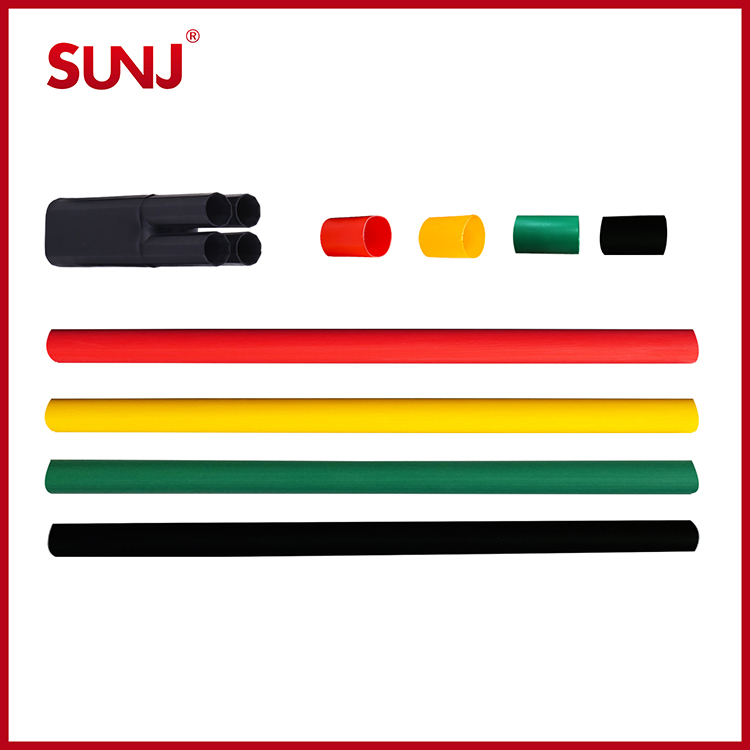
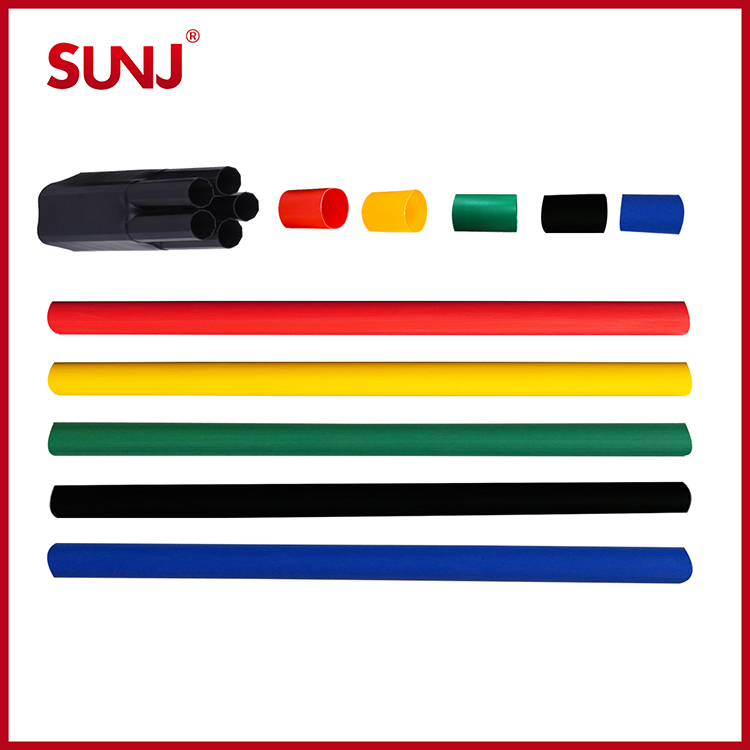
Cold shrink accessories are factory-expanded EPDM or silicone-rubber bodies mounted on a removable spiral or straight supporting core. During installation you simply pull the core out; the pre-stretched rubber immediately contracts to form a tight, resilient seal around the cable. No heat, no open flame, no power source required.
Heat shrink accessories use cross-linked polyolefin tubing that has been radially expanded and “memorised”. A hot-air gun or gas torch heats the tube, and it shrinks down onto the cable. The installer must control temperature and heating pattern carefully to avoid scorching or uneven shrinkage near the conductor.
Both are available across our cold shrinkable cable accessories and heat shrinkable cable accessories product lines.
Cold Shrink vs Heat Shrink: The Key Differences
| Factor | Cold shrink | Heat shrink |
|---|---|---|
| Installation tool | None / simple pulling | Hot-air gun or gas torch |
| Speed | Fast, single action | Moderate, heating step by step |
| Hazardous areas | Safe (no flame) — ideal for explosion-risk zones | Open flame restricted in confined / flammable sites |
| Sealing quality | Elastomer actively grips — excellent water seal | Depends on uniform heating |
| Upfront cost | Higher | Lower |
| Skill dependence | Low — hard to get wrong | Higher — scorching risk |
Selecting by Voltage Class: 11 kV, 22 kV, 33 kV and Above
Both cold and heat shrink accessories cover the full MV range, but the kit must match the system voltage and the applicable standard (IEC 60502-4, HD 629, or IEEE 404):
| Voltage class | Typical use | Recommended kit |
|---|---|---|
| 11 kV | Distribution feeders, ring main units | Standard MV termination / joint (both shrink types) |
| 22 kV | Urban sub-transmission | MV termination / joint, higher stress-control grade |
| 33 kV | Sub-transmission, industrial plants | MV termination / joint, reinforced insulation |
| 36 kV / 42 kV | Dedicated MV networks | 36/42 kV indoor & outdoor termination kits |
| 64–110 kV | High-voltage cable links | 64–110 kV HV accessories |
European (IEC) vs American (IEEE) Interface Standards
The accessory body is only half the story—the connector interface must match your switchgear or transformer bushing. The two dominant families are not interchangeable:
- European 630 A series (IEC 60137 / EN 50180–50181): the standard elbow and bushing interface across Europe, the Middle East and most Asian utilities. See our European 630A series cable accessories.
- American 200 A / 250 A / 600 A series (IEEE 386): the separable connector interface used on North-American-style gear. We supply the 200 A, 250 A and 600 A series compatible accessories.
Always confirm the bushing interface before ordering—mixing IEC and IEEE interfaces is a frequent and costly specification error.
Which Should You Specify?
- New builds & retrofits, speed matters: choose cold shrink—fast, repeatable, minimal training.
- Explosion-risk or confined spaces: cold shrink is mandatory—no open flame.
- Tight capital budget, dry indoor rooms: heat shrink remains cost-effective when a torch is acceptable.
- Cable joints & branch points: use a fusion-type power cable joint or an European cable branch box matched to the same shrink family.
- Mixed fleets: standardise on one family per crew to simplify training and spares.
Installation & Sizing Checklist
- Confirm the cable cross-section, insulation type and system voltage.
- Select the shrink family and the correct IEC or IEEE interface.
- Strip semi-conducting and insulation layers to the kit’s marked dimensions—keep the cut edge square.
- Cold shrink: slide the body, then pull the support core steadily. Heat shrink: heat evenly from the centre outward, avoiding the conductor.
- Fit the stress cone / screen connection and bond the earth correctly.
- Apply the water-blocking and outer seal layers per the kit instruction.
- Perform a withstand / partial-discharge test before energising.
FAQ
Q: Which is cheaper, cold or heat shrink?
A: Heat shrink has the lower upfront price. Cold shrink costs more but saves labour time and reduces rework risk.
Q: Does cold shrink need a power source?
A: No. That is its main advantage—it installs in seconds with no tooling beyond a pulling action.
Q: Can I use heat shrink in an explosive area?
A: Generally no. Open-flame heating is restricted; specify cold shrink instead.
Q: Do I need a special kit for 36 kV?
A: Yes—use a dedicated 36/42 kV termination kit rated for that class, not a standard 11–33 kV kit.
Q: Are European and American interfaces interchangeable?
A: No. IEC 630A and IEEE 200/250/600A interfaces differ mechanically; match the bushing standard.
Conclusion
The cold shrink vs heat shrink decision is not about which is “better” in the abstract—it is about matching installation safety, speed, voltage class and interface standard to your project. Cold shrink leads on safety and repeatability; heat shrink leads on capital cost. Get the voltage class and the IEC/IEEE interface right and either will give decades of service.
Need a specification sheet? SUNJ manufactures the full MV range—cold shrinkable and heat shrinkable cable accessories, fusion joints and branch boxes—tested to IEC 60502-4. Browse the range or contact our engineers for a tailored selection.