
Introduction
For underground projects, the useful question is not “Are mechanical lugs OK for burial?” The useful question is: which exact model is documented for this underground or wet connection, for this duty (grounding vs power), and with which sealing or accessory system?
Mechanical lugs use bolted clamping instead of a dedicated crimp die set. SUNJ publishes shear-bolt options such as BLMT mechanical torque lugs for connecting copper, aluminum, or aluminum-alloy cable to an aluminum equipment end in medium voltage. That published equipment-termination scope is not the same thing as a universal direct-burial rating.
Important boundary: published product category pages do not by themselves prove direct-burial rating. Suitability for soil burial, concrete embedment, or a wet handhole must be verified against the exact model drawing, datasheet, and the sealing/insulation system used around the lug.
Need an underground suitability check?
Share conductor metal/size, grounding vs power duty, installation method (soil / concrete / handhole), and any joint kit or sealing system. Contact SUNJ Electric with drawings for a documentation-based review—not a blanket burial promise.
What “Underground Connection” Really Means
“Underground” covers several exposures. Each one needs its own evidence trail.
- Soil burial: continuous moisture, soil chemistry, and limited access for rework.
- Concrete embedment: trapped moisture risk and almost no post-install access.
- Wet handholes / manholes: standing water, condensation, and repeated opening.
- Duct or vault transitions: mixed wet/dry cycles and accessory interfaces.
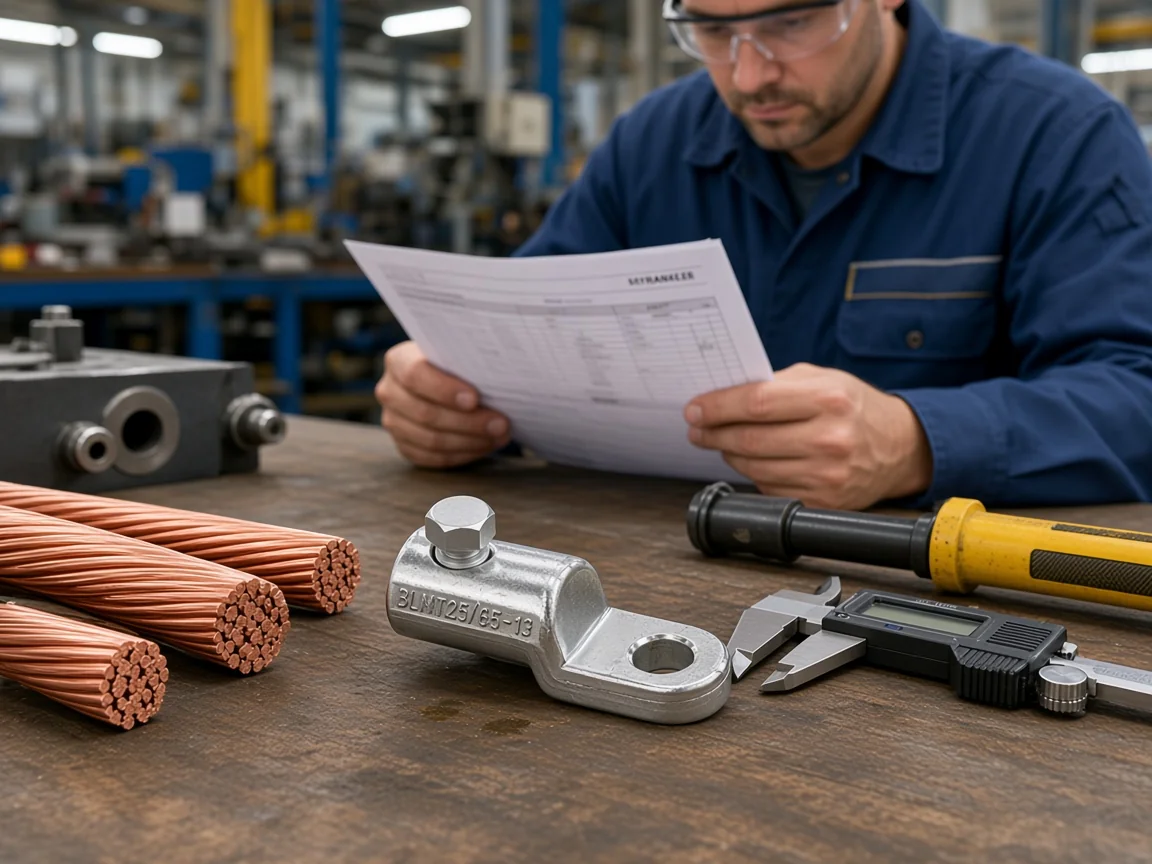
Engineer verifying mechanical lug datasheet and sealing evidence for underground connection suitability
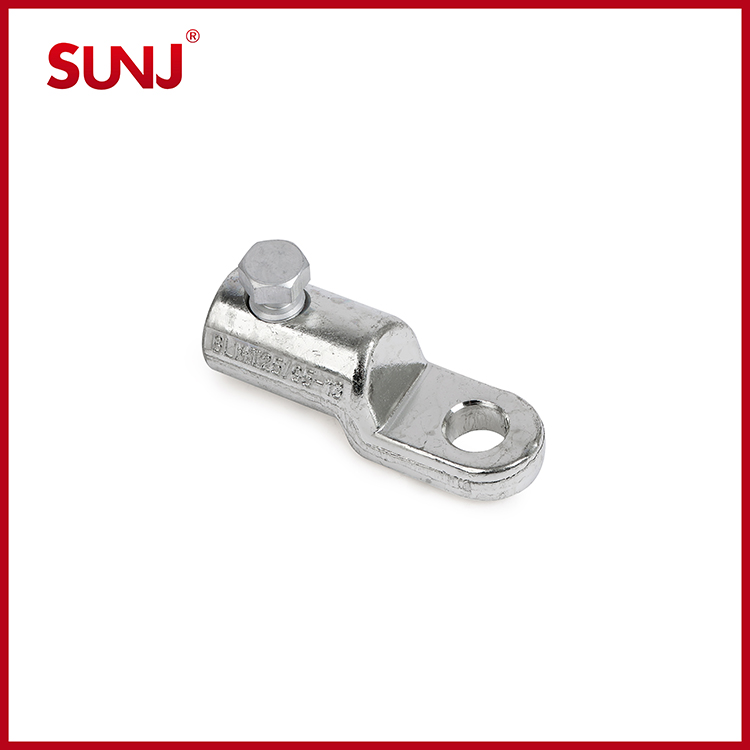
BLMT-25/95 Mechanical Torque Lugs details
If a datasheet only says outdoor, indoor, or general medium-voltage equipment termination, do not infer unrestricted direct burial. Ask for the statement that matches your installation method.
| Exposure | Priority risks | Evidence to request before specifying |
|---|---|---|
| Soil direct burial | Corrosion, moisture ingress, inaccessible failure | Exact-model burial/wet statement + sealing system documentation |
| Concrete embedment | Trapped moisture, zero rework access | Model approval for embedment method + insulation/seal design |
| Wet handhole | Standing water, condensation, maintenance cycling | Wet-location guidance + inspectable sealing arrangement |
| Equipment termination in dry enclosure | Contact quality, torque/shear process | Standard mechanical lug datasheet may be sufficient—still confirm size/range |
Grounding vs Power Duty Still Matters
Grounding/bonding joints and current-carrying power joints fail for different reasons. Keep the duties separate during verification.
Grounding and bonding connections
Primary needs are durable continuity and corrosion resistance. Documentation may emphasize bonding performance. That evidence alone does not prove the same lug is approved as a buried phase/neutral power joint.
Current-carrying power connections
Power joints also need contact resistance control, thermal performance, and a sealing/insulation system compatible with the operating voltage. For equipment-end terminations, start from the published BLMT-type scope, then verify whether the underground method and accessories are covered for the exact part number.
For intermediate splices rather than lug terminations, evaluate connector products separately (for example BSMB mechanical cable connectors for intermediate connections). Do not assume a lug datasheet covers a splice, or that a splice datasheet covers a lug.
Clarify duty before RFQ
State grounding vs power, voltage class, and whether you need a lug termination or an intermediate splice. Contact SUNJ Electric so the review targets the right product family.
Verification Checklist (Exact Model, Not Category Claims)
Use this checklist on every underground or wet-location RFQ. Category marketing text is a starting point only.
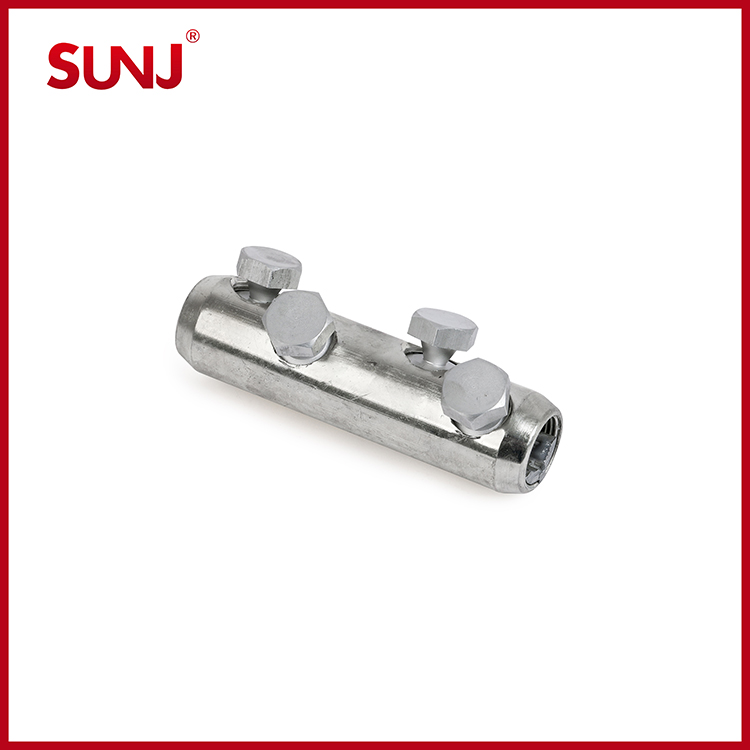
BSMB-95/240 Mechanical Cable Connector details
- Identify the exact model (series + size + palm/bolt configuration)—not only “mechanical lug.”
- Read the published application sentence on the product page and compare it to your duty.
- Request the drawing/datasheet PDF for that part number; keep the revision in the project file.
- Ask for burial/wet/handhole evidence explicitly if your method needs it. Absence of a statement is not approval.
- Document the sealing/insulation system (joint kit, mastic, enclosure, heat/cold shrink, etc.) that will surround the metal body.
- Confirm conductor acceptance: metal (Cu/Al/Al-alloy), size range, and strand class.
- Confirm process controls: shear-bolt / torque method, preparation, and inspection points.
- Separate grounding vs power acceptance criteria in the submittal package.

Sealed underground cable connection system around a mechanical connector being checked before backfill
Example of a published equipment-termination scope: the BLMT page states use for connection of copper, aluminium, or aluminium-alloy cable with an aluminium equipment end in medium voltage, with torque-controlled sheared-off bolts. That is useful termination evidence—and still not a substitute for underground sealing verification on your project.
| Check item | Pass signal | Fail / stop signal |
|---|---|---|
| Exact model listed | Part number + drawing revision attached | Only category name on the quote |
| Duty match | Grounding or power clearly scoped | One lug claimed for every underground duty |
| Environment match | Written soil/handhole/wet statement for that model | Inferred from “outdoor” wording only |
| Sealing system | Named kit/method with interface instructions | Bare metal body assumed “OK to bury” |
| Conductor fit | Metal + mm² + class inside published range | Field “make it fit” without range check |
How to Use SUNJ Pages Without Over-Claiming
Start research from the mechanical lugs category and the BLMT product page. Use them to understand materials, shear-bolt behavior, and equipment-termination scope. For any underground claim, escalate to exact-model documents and sealing-system evidence.
Recommended RFQ attachments from the buyer side: single-line diagram snippet, cable schedule, installation method statement, photos of the handhole or trench condition, and the preferred sealing kit brand/type if already standardized by the utility or EPC.
Send your verification pack
Upload drawings and the checklist answers above. Contact SUNJ Electric for a model-level review against published documentation.
FAQ
Are all mechanical lugs suitable for direct burial?
No. Do not assume universal direct-burial suitability from a category page. Verify the exact model and the sealing system for your underground method.
Do published product pages prove burial rating?
Not by themselves. Product pages describe general application scope. Burial, wet-location, or handhole approval requires matching statements on the model documents and/or the complete sealed joint system.
Should grounding and power use the same underground acceptance package?
Keep criteria separate. Grounding focuses on durable continuity and corrosion control; power also needs thermal and insulation/sealing evidence for load current.
Where do BLMT products fit?
BLMT is published as a mechanical aluminum lug for cable-to-aluminum-equipment connection in medium voltage with torque-controlled shear bolts. Use it as a termination candidate, then verify underground method separately.
What if my project needs an intermediate underground splice?
Evaluate intermediate connectors such as BSMB on their own documentation. Do not reuse a lug termination datasheet as splice proof.
Conclusion
Underground mechanical lug selection is a verification workflow. Distinguish exposure type, separate grounding from power, and refuse category-level burial assumptions. Published pages help you shortlist families such as mechanical lugs and BLMT—but exact-model drawings and sealing evidence close the decision.
Related Resources
Useful pages already published on sunjelec.com:
- Mechanical Lugs vs Mechanical Cable Connectors: BLMT and BSMB Compared — termination vs intermediate roles
- Shear Bolt Connector Central Barrier and Conductor Positioning Guide — positioning discipline for shear-bolt connectors
- Too Loose Burns. Too Tight Breaks. — why “tight enough” is not an electrical standard
- A Reliable Cable Joint Starts Before the Connector Is Installed — preparation before metal hardware choice